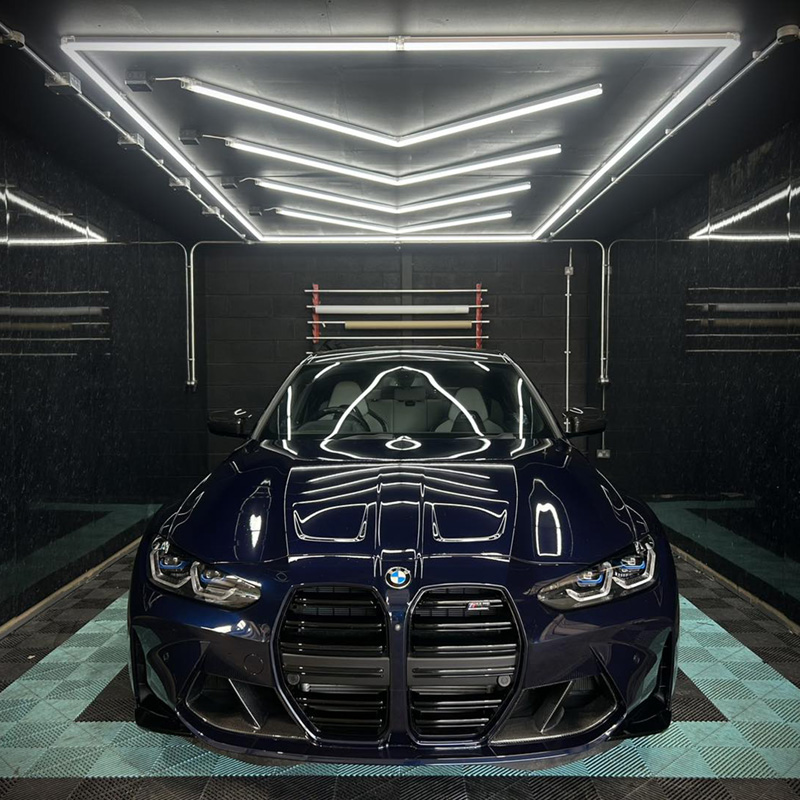
The commercial interior design sector has decisively moved away from standard, uninspiring fluorescent panels. Today, dynamic architectural lighting leads the industry, completely redefining how customers and employees experience physical spaces. Business owners frequently struggle to find fixtures that are both highly functional and visually striking. They often settle for generic options that lack the modern appeal required for premium environments. Poor illumination not only causes eye strain but can actively diminish customer perception and ultimately hurt sales.
Polygonal geometric fixtures provide an exceptional modern solution. They seamlessly blend high-performance illumination with striking aesthetic appeal, acting as both a primary light source and a captivating piece of modern interior architecture. This guide explores the top commercial spaces where these advanced systems excel. Specifically, we will examine how they transform commercial environments and outline exactly what technical specifications you must evaluate before making a purchase, ensuring a strategic investment that elevates your brand value.
Key Takeaways
Versatile Applications: These modular systems are transforming modern hair salons, retail boutiques, corporate offices, and auto workshops by providing shadowless, high-quality illumination.
Industry-Specific Benefits: From guiding customer journeys in retail to ensuring microscopic clarity in industrial garages, the adaptable design fits virtually any commercial requirement.
Customizable Ambiance: Programmable color-changing technology allows entertainment venues and fitness studios to dynamically shift their atmosphere and reinforce brand identity.
Smart Investment: Commercial buyers must prioritize brightness, color accuracy, modular scalability, and safety certifications to guarantee a high return on investment.
Why Polygonal Geometric LED Lights Are Transforming Commercial Spaces
Recent market analyses highlight a massive surge in architectural lighting adoption within commercial renovations. Driven by a post-pandemic push to create highly experiential physical spaces, businesses realize lighting is no longer just a utility. It acts as a core component of interior architecture. Industry data indicates a sharp pivot toward modular, geometric fixtures in retail and automotive sectors, primarily because these designs break the monotony of traditional layouts without requiring expensive structural renovations. Furthermore, the honeycomb pattern mimics organic structures, tapping into biophilic design trends that naturally elevate human comfort and spatial perception.
The Psychology of Geometric Shapes in Design
In architectural design, shapes communicate specific psychological cues. Hexagons and polygons naturally draw the human eye upward, creating a strong sense of innovation, order, and structural integrity. Drawing inspiration from natural honeycomb patterns, these distinct lines make retail stores, offices, and salons feel significantly more upscale and technologically advanced. Psychologically, geometric patterns convey precision and modern capability, elevating the perceived value of the services offered beneath them.
Modularity and Customization
A core advantage for commercial buyers is the modular, snap-and-play nature of these systems. Facility managers are never locked into a single rigid ceiling layout. Utilizing various 3-pin Y, V, and 120-degree connectors, installation teams can construct continuous grids, abstract wave patterns, or standalone honeycomb clusters. Consequently, this flexibility ensures that the fixtures can be tailored precisely to the specific dimensions and architectural constraints of any room, adapting easily if a business expands or rebrands.
High-Performance LED Technology
Beyond striking aesthetics, the underlying technology delivers substantial operational benefits. Commercial spaces require luminaires that can run continuously for 10 to 14 hours a day without failure. Advanced light-emitting diodes produce minimal heat emission, which significantly reduces the strain on commercial climate control systems. In addition, they offer exceptional energy efficiency, delivering massive lumen outputs while consuming a fraction of the electricity required by traditional halogen setups. Reduced maintenance and replacement costs make these fixtures a highly lucrative financial choice.
High-End Hair Salons & Barbershops: The Ultimate Hexagon LED Light Setup
Lighting is arguably the most critical design element within the beauty industry. The hum of clippers and the precision of a chemical color mix rely entirely on the quality of light overhead. Poor illumination creates uneven fade transitions and inaccurate dye applications, ultimately leading to dissatisfied clients.
Eliminating Shadows for Precision Cuts
Standard overhead spotlights often cast harsh, unflattering facial shadows, making it incredibly difficult for stylists to evaluate symmetrical cuts. By investing in a professional Hexagon LED Light system, salon owners introduce an overhead grid design that distributes light from multiple intersecting angles. This multi-directional illumination effectively eliminates shadows. It provides stylists with clinical visual clarity for intricate detail work while drastically reducing eye fatigue during long shifts.
The Importance of High Color Accuracy
Color accuracy is absolutely non-negotiable when dealing with hair dye and bleach. Stylists rely on the light source to reveal the true tone of the color gradient. Premium geometric LEDs are engineered to deliver a High Color Rendering Index, typically scoring above 90. A high rating ensures that colors appear exactly as they would under natural sunlight, preventing costly chemical mistakes and ensuring the client is thrilled with the result when they step outside.
Auto Detailing Shops & Garages: Maximizing Clarity with Hexagrid Working Lighting
The automotive detailing and luxury garage sector demands an industrial-chic aesthetic combined with clinical-level visibility. In these demanding environments, lighting functions as a critical tool for precise inspection and rigorous quality control.
Unmatched Illumination for Paint Correction
Paint correction, ceramic coating, and polishing require technicians to identify microscopic swirl marks, holograms, and clear coat scratches. Standard garage fixtures diffuse too much light, easily hiding these tiny imperfections. Implementing Hexagrid Working Lighting provides continuous, sharp lines of bright illumination reflecting directly off the curved surfaces of a vehicle. These sharp reflections make it significantly easier for detailers to spot defects, ensuring a flawless finish every single time.
Durable and Professional Aesthetics
High-end automotive clients expect the facilities handling their luxury vehicles to reflect a premium level of quality. Upgrading a standard, dimly lit garage ceiling to a comprehensive hexagrid layout instantly transforms a basic workshop into a high-tech automotive studio. The clean, geometric lines convey professionalism and meticulous attention to detail. Additionally, durable polycarbonate covers resist impact and protect the internal diodes, guaranteeing a long lifespan in tough industrial conditions.
Retail Stores & Boutiques: Highlighting Products with Precision
For retail environments, visual merchandising heavily dictates foot traffic and sales conversions. Illumination must attract passersby, highlight inventory textures, and create an engaging shopping atmosphere that encourages customers to linger.
Guiding the Customer’s Journey
Strategic fixture placement subconsciously dictates how shoppers navigate a physical space. By installing continuous geometric light paths along the ceiling, store designers can create visual corridors that gently guide customers toward high-margin product displays or new arrival sections. High-contrast illumination makes merchandise pop against neutral backgrounds, drawing shoppers organically toward specific zones without the need for intrusive physical signage.
Modern Corporate Offices & Co-Working Spaces
The modern workplace is rapidly evolving to prioritize employee well-being, daily productivity, and architectural aesthetics. Standard office lighting has long been associated with sterile environments, midday fatigue, and frequent headaches.
Boosting Productivity and Reducing Eye Strain
Employees spending eight hours a day looking at computer screens are highly susceptible to eye strain caused by the harsh glare of traditional fluorescent troffers. Geometric systems equipped with frosted polycarbonate diffusers provide bright, even light that dramatically reduces this glare. Utilizing a neutral daylight color temperature helps maintain alertness, supports natural circadian rhythms, and ultimately fosters a more productive, comfortable working environment.
Entertainment Venues, Gyms, and Studios: Setting the Mood with RGB Hexagon Lights
Spaces designed for physical activity, nightlife, and entertainment require dynamic environments capable of shifting the atmosphere instantly to match the energy of the crowd.
Dynamic Color Control
Spin studios, e-sports arenas, and modern bars thrive on high-energy visual stimulation. The integration of RGB Hexagon Lights allows facility managers to utilize programmable color-changing technology. Through smart controllers, these fixtures synchronize to pulse with the beat of the music during a high-intensity interval training class, or they can be programmed to display specific corporate colors during a sponsored event. This dynamic control maximizes the venue's versatility and creates a massive visual impact that makes the environment unforgettable.
Crucial Factors to Consider Before Buying Commercial Geometric Lighting
Purchasing a commercial lighting system represents a significant capital investment. Facility managers and installation contractors must evaluate specific technical parameters to ensure the chosen system meets strict operational codes and provides a solid return on investment.
Feature
Standard Commercial Lighting
Polygonal Geometric LED Systems
Visual Impact
Basic utility, often hidden or ignored
Architectural focal point, modern aesthetic
Luminous Efficacy
Typically 70 to 90 lumens per watt
High efficiency at 110 to 120 lumens per watt
Shadow Reduction
Prone to casting harsh directional shadows
Multi-angled grid completely eliminates shadows
Modularity
Fixed dimensions, requires structural changes
Plug-and-play connectors for limitless scalability
Brightness and Lumens per Watt
Lumen output determines the actual brightness of the fixture. For commercial tasks requiring high visibility, a system should output at least 110 to 120 lumens per watt. Buyers must calculate the total required lumens based on the square footage of the room and the height of the ceiling. Naturally, higher ceilings require fixtures with a significantly higher lumen output to maintain adequate brightness at floor level.
Material Quality and Safety Certifications
Material quality dictates longevity in commercial environments. Extruded aluminum housing is absolutely essential for effective heat dissipation, extending the lifespan of the internal LED chips up to 50,000 hours. In addition, fire-resistant polycarbonate diffuser covers ensure even light distribution while meeting strict commercial fire safety standards. Systems must also support universal AC100-240V input to ensure compatibility with standard commercial electrical grids.
Best Practices for Designing and Installing Your Geometric Lighting Layout
Proper planning and execution are critical to maximizing the visual impact and longevity of your new system. Addressing these practical factors early prevents costly modifications and delays during the installation phase.
Planning Your Grid
Before ordering, map out the exact ceiling dimensions using CAD software or detailed floor plans. Account for existing ceiling obstacles such as HVAC vents, sprinkler heads, and security cameras. Sketching the honeycomb or abstract design on paper ensures you order the exact number of tubes and specific angled connectors required, eliminating guesswork on the job site.
Mounting Options
The architectural structure of your ceiling dictates the mounting method. For standard drywall or solid wood ceilings, flush mounting is the most secure approach, providing a clean, integrated look. In contrast, for commercial spaces with high, open-joist, or exposed industrial ceilings, the system should be suspended using adjustable aircraft wire cables. Suspension mounting allows you to lower the light source closer to the work area, maximizing brightness and creating a striking floating effect. Using a laser level during this process ensures the grid hangs perfectly straight.
Power Supply Management
Massive commercial grids draw substantial electrical current. A common installation mistake involves overloading a single power supply or circuit. It is a fundamental best practice to calculate the total wattage of the assembled grid and divide it appropriately across multiple LED drivers. As a standard rule, the total load should never exceed 80 percent of the power adapter’s maximum rated capacity. Distributing the load ensures stable illumination, prevents flickering, and protects the building's electrical infrastructure.
Conclusion
Whether you are illuminating a high-end salon, a retail boutique, or an industrial auto workshop, polygonal geometric fixtures offer the perfect blend of form and function. Upgrading your commercial lighting is one of the highest-ROI investments you can make. It instantly elevates interior design, improves employee productivity, and enhances the overall customer experience. Ready to transform your commercial space? Explore the professional-grade Contation LED lighting collections at https://www.contationled.com today to find the perfect modular setup tailored specifically for your business growth.
FAQ
Can I customize the shape of my geometric LED system?
Yes, most commercial geometric lighting systems are highly modular. You can connect the lightweight tubes using specialized 3-pin connectors. This allows you to construct continuous grids, single hexagons, or entirely unique abstract shapes. You are never limited to just standard honeycomb patterns.
Are RGB color-changing lights suitable for primary task work?
While RGB systems are incredible for ambient, decorative, and dynamic mood lighting, they are not recommended for precise professional tasks. For environments requiring meticulous detail, you should utilize standard daylight geometric LEDs typically between 4000K and 6500K. This ensures maximum visual clarity and accurate color rendering.
How difficult is it to install these grids in a commercial garage?
Installation is surprisingly straightforward for most standard commercial spaces. The lightweight tubes click together easily using secure plug-and-play connectors. Depending on your ceiling architecture, the assembled grid can be screwed directly into drywall or suspended using wire cables. However, for large commercial grids, hiring a licensed electrician to safely handle the final power supply connection to your building's mains is highly recommended.
How many lumens do I need for a commercial auto detailing garage?
For professional auto detailing and paint correction, you need intense, shadow-free illumination. Industry standards recommend aiming for 75 to 100 lumens per square foot at the working surface level. Utilizing geometric lighting systems that output 110 to 120 lumens per watt ensures you meet these high-visibility requirements efficiently.
Can geometric LED systems be installed on suspended drop ceilings?
Yes, they can be installed on suspended drop ceilings, but careful weight distribution is required. Because drop ceiling tiles cannot support heavy loads, the geometric light grid must be anchored directly to the true ceiling above the drop ceiling using suspension cables, or secured to the robust metal T-bar grid rather than the fragile acoustic tiles.
What is the typical lifespan of commercial geometric LEDs?
High-quality commercial LED systems featuring extruded aluminum housing are engineered for longevity, typically lasting up to 50,000 hours. This translates to years of reliable, maintenance-free continuous operation. Furthermore, because of the modular design, if a single diode or tube eventually fails, replacing that individual segment is simple and inexpensive.