


Views: 0 Author: Site Editor Publish Time: 2026-10-28 Origin: Site


Stepping into a modern detailing bay often feels like walking onto a sci-fi movie set. The rising trend of geometric ceiling fixtures creates a high-end, futuristic look. This striking illumination instantly elevates both commercial and residential spaces. A significant conflict arises when aesthetics meet the harsh reality of automotive care. Car washes generate massive amounts of humidity, atomized steam, and airborne moisture. Electronics and water are notoriously incompatible. Facility owners frequently wonder if these modern fixtures can survive such a hostile environment. Not all systems are built for wet locations. However, specifically engineered, high-IP-rated models can absolutely withstand intense moisture. Selecting the right car detailing studio light is crucial for operational safety and long-term durability.
Recent industry analyses reveal a significant shift in the automotive care sector. Commercial car washes and boutique detailing studios increasingly compete on customer experience. The visual environment has become just as critical as the service itself. Market trend reports indicate a surging demand for specialized, climate-resilient illumination systems. These setups must endure extreme moisture while delivering a premium aesthetic. Consequently, manufacturers are moving away from traditional fluorescent tubes. They are heavily investing in advanced sealing technologies for modern geometric fixtures to meet the rigorous demands of these high-humidity commercial spaces.
Ingress Protection is Non-Negotiable: A standard indoor fixture will quickly fail in a wash bay. You need an IP54 or IP65 rating minimum for reliable humidity resistance.
Material Science Matters: Aviation-grade aluminum frames and thick polycarbonate covers act as a vital barrier. They protect internal diodes from moisture intrusion and chemical corrosion.
Ventilation and Installation: Proper sealing of electrical connections and adequate ceiling ventilation prevent condensation buildup inside the grid.
Routine Upkeep: Maintenance is mandatory. You must follow specific procedures to clean the fixtures safely and ensure their longevity in a perpetually wet environment.
Beyond simple illumination, the unique geometric design serves a highly functional purpose. The interlocking grid structure effectively eliminates harsh shadows from multiple angles. This makes it significantly easier for detailers to spot lingering dirt, soap residue, and stubborn water spots during a wash. Furthermore, this expansive, uniform light spread creates a stunning showroom aesthetic. This visual upgrade acts as a powerful marketing tool. It attracts high-end customers to professional wash bays and directly boosts service conversion rates. Upgrading to a properly sealed hexagonal LED panel transforms a dark, damp garage into a premium automotive studio.
Performance in a detailing environment relies heavily on light quality. These specialized systems deliver an exceptionally high lumen output. Professional-grade units typically provide 110 to 120 lumens per watt. They pair this efficiency with an optimal color temperature hovering around the 6500K daylight spectrum. This crisp, white light replicates natural sunlight. Detailers require this exact spectrum for precise color matching, paint correction, and meticulous washing. You can see every swirl mark and paint imperfection with absolute clarity.
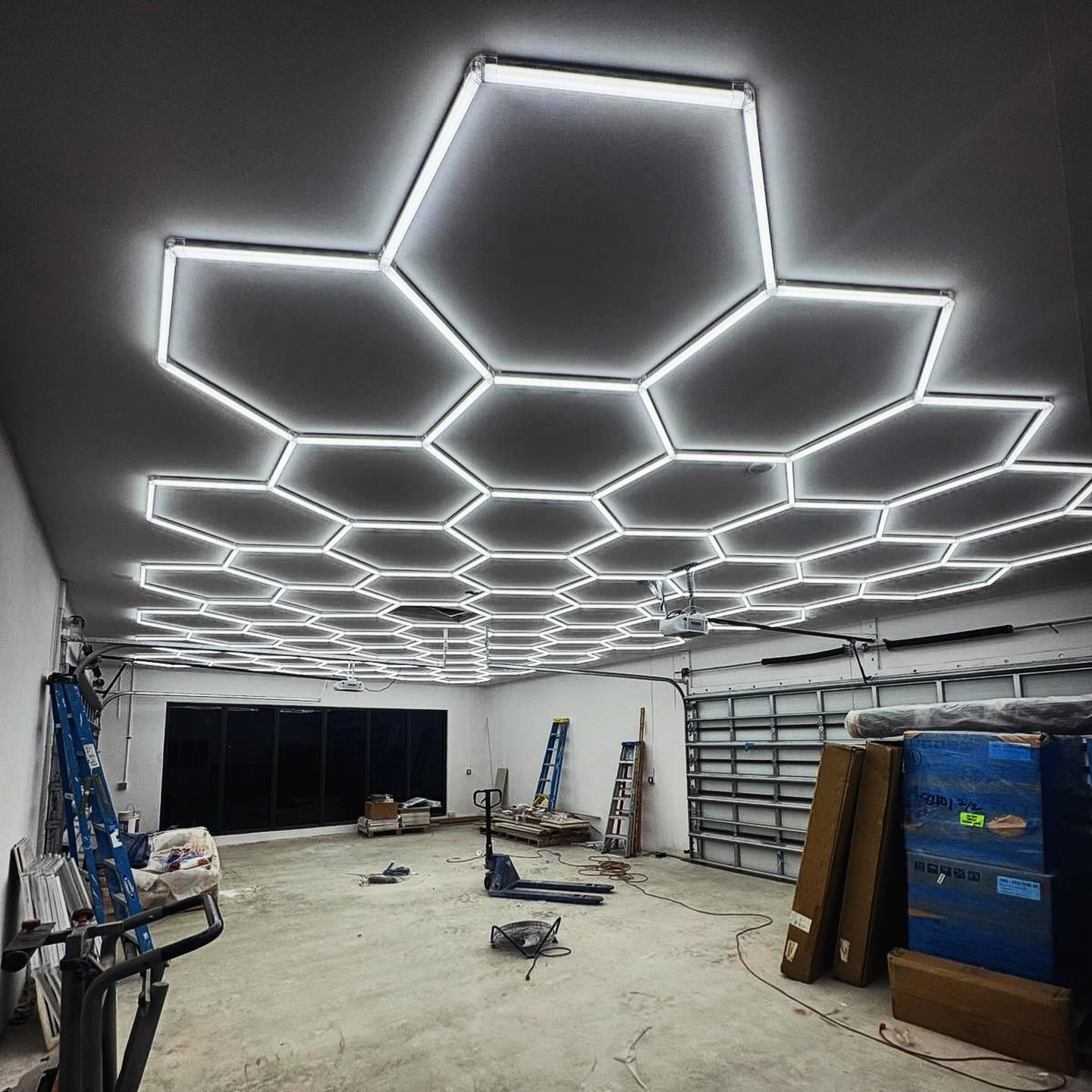
To understand moisture resistance, you must break down the Ingress Protection scale. The first digit represents protection against solid particles like dust. The second digit indicates resistance to liquids. Standard IP20 or IP40 fixtures are strictly designed for dry, climate-controlled indoor use. Ambient moisture will penetrate these casings almost immediately in a wash bay. In contrast, an IP54 splash-proof or IP65 water jet-proof rating is the absolute minimum requirement for any garage light operating in a car wash environment. This robust sealing ensures airborne steam cannot reach the sensitive diodes.
Clever marketing jargon easily misleads buyers. A water-resistant fixture can generally handle ambient humidity and an occasional light splash. Only a genuinely waterproof IP65 system handles the intense environment of a wash bay safely. This includes surviving accidental, indirect spray from a high-powered pressure washer. Understanding this distinction prevents costly equipment failures and dangerous electrical shorts.
IP Rating | Moisture Resistance Level | Best Application Scenario | Wash Bay Suitability |
|---|---|---|---|
IP20 / IP40 | Zero to minimal liquid protection. | Climate-controlled showrooms, dry home garages. | Highly Dangerous. Will fail quickly. |
IP54 | Protected against splashing water from any angle. | Standard detailing bays, ceramic coating rooms. | Acceptable for ambient humidity and light steam. |
IP65 | Protected against low-pressure water jets and heavy steam. | Active wet wash bays, high-volume commercial setups. | Highly Recommended. Maximum durability. |
The science of condensation is the primary enemy of bay lighting. Imagine warm, atomized steam from a hot water pressure washer rising and hitting the cool outer surface of a fixture. This rapid temperature fluctuation causes internal condensation to form within a poorly sealed unit. Over time, trapped water droplets dim the overall light output. They scatter the beam and inevitably lead to premature diode failure. Managing thermal dynamics is just as important as waterproofing.
When humidity breaches the outer casing, internal components face severe risk. Moisture reaching exposed copper wiring or cheap plastic connectors initiates a rapid oxidation process. This corrosion leads to rust, erratic flickering, electrical shorts, or severe fire hazards. Mitigating ambient moisture is a structural necessity rather than a mere maintenance suggestion. You must address humidity at the source to protect your investment.
Premium models abandon cheap, brittle plastics. They utilize aviation-grade aluminum instead. Aluminum naturally resists rust and acts as a highly efficient heat sink. By dissipating the heat generated by the LED strips, the aluminum frame actively prevents the extreme temperature differentials that cause moisture trapping. Look for frames with a minimum 20mm width for optimal structural integrity and heat dissipation.
The weakest point of any modular lighting system is the junction where two pieces meet. High-quality fixtures utilize silicone-sealed, locking pins that firmly snap together. This tight tolerance keeps ambient moisture and creeping steam completely locked out of the electrical joints. When selecting a honeycomb light, verify that the connector pins feature integrated rubber gaskets.
A bare LED strip will not survive a single day in a wash bay. Robust, sealed Polycarbonate covers are essential. These thick diffusers shield delicate LED strips from direct water exposure and harsh chemical vapors. They also provide a smooth, continuous, and glare-free light spread across the vehicle surface. Cheap acrylic covers will yellow and crack under UV and chemical exposure, but true Polycarbonate remains crystal clear.
A common installation mistake is mounting the grid completely flush against a damp ceiling. You should always leave a small air gap using suspension cables or standoff mounts. This gap allows trapped humidity to escape. This crucial ventilation prevents stagnant moisture from breeding mold or accelerating rust on the ceiling infrastructure. Good airflow naturally regulates the fixture's operating temperature.
Even the best lights will fail if the main power source is exposed. Always use waterproof junction boxes for your hardwiring. Wrap any exposed wire nuts or connections in dielectric grease and waterproof silicone tape. Specifically, ensure the main power transformer is housed in a designated dry zone well away from the primary wash area. Isolating the power supply drastically reduces the risk of moisture-induced electrical failures.
Maintaining your investment requires the right approach. Avoid harsh, acidic wheel cleaners or heavy industrial degreasers when removing soap scum or hard water spots. These aggressive chemicals quickly strip the protective anodized coating right off the metal. Stick to mild, pH-neutral soaps instead. Taking a gentle approach ensures you do not inadvertently void your warranty or damage the structural integrity of the frame.
Execution is just as important as the chemicals you use. First, completely turn off the power at the main breaker. Use a slightly damp microfiber towel to gently wipe down the Polycarbonate covers. Once the soap scum is removed, immediately follow up with a dry microfiber cloth to wipe down the aluminum frame. Drying the metal instantly prevents hard water spots and mineral buildup from permanently etching the surface.
The most effective way to protect your lighting is to control the room environment. Relying solely on the IP rating is a gamble over a period of years. Installing heavy-duty exhaust fans or commercial-grade dehumidifiers pulls dense steam out of the wash bay quickly. This drastically reduces the environmental stress placed on your electronic equipment and creates a much more comfortable working environment for detailers.
A modern geometric lighting system can absolutely withstand the intense humidity of a car wash. You must do your research and purchase a high-quality, properly IP-rated model. While it may be tempting to cut corners with cheaper, indoor-only alternatives, investing in aviation-aluminum frames and sealed modular panels saves significant money on replacements in the long run. By prioritizing robust materials and following safe installation practices, you keep your wash bay looking incredibly professional and brilliantly illuminated. For facility owners looking to upgrade their illumination safely, exploring the specialized, high-IP-rated fixtures from Contation LED ensures you get the exact specifications required to survive and thrive in a high-humidity detailing environment.
No. Even IP65-rated lights are designed to withstand low-pressure water jets and ambient humidity, not the extreme pressure of a direct wand blast. Always wash around the ceiling lights carefully to avoid forcing water past the silicone seals.
High-quality aviation aluminum does not rust like traditional steel. It can oxidize or corrode if repeatedly exposed to harsh, acidic car wash chemicals or heavy degreasers. Regular cleaning with a simple, pH-neutral soap is required to maintain the factory finish.
Yes, as long as they feature tightly sealed connectors and a proper waterproof rating of at least IP54. Because of their durability and shadow-reducing design, they are widely used as the primary illumination source in professional detailing shops worldwide.
Moisture causes the internal LED diodes to short out, resulting in erratic flickering or completely dead sections. If you notice condensation forming inside the tube, power down the light immediately. Carefully disassemble the affected section, dry it completely, and check the rubber seals before reinstalling it.
Preventing condensation requires a two-step approach. First, utilize IP65-rated fixtures with thick Polycarbonate covers and silicone-sealed joints to physically block moisture. Second, improve the ambient room ventilation with exhaust fans to prevent warm steam from settling on cool metal surfaces.
Absolutely. Their high lumen output of up to 120 lumens per watt and 6500K color temperature make them the industry standard. They provide the shadowless, daylight-mimicking illumination required for high-end paint correction, polishing, and ceramic coating applications.


