


Views: 0 Author: Site Editor Publish Time: 2026-09-07 Origin: Site


Facility environments dictate workforce endurance. When you run 8- to 12-hour shifts, inadequate lighting accelerates physical and cognitive fatigue. Legacy systems like fluorescent tubes plague workspaces with high flicker rates, poor color rendering, and harsh glare. These factors directly correlate with tension headaches, severe eye strain, and a spike in error rates during the final hours of a shift. Workers simply cannot maintain focus under poor visual conditions.
Transitioning to modern lighting infrastructure solves this operational problem. Upgrading to an LED ceiling panel light acts as an ergonomic tool rather than just an energy-saving measure. It sustains productivity, enhances mental alertness, and ensures safety during extended operational hours. Facility managers must treat lighting as a primary driver of human performance. Optimizing the visual environment protects your workforce from premature exhaustion and keeps production metrics stable.
Visual fatigue stems from mechanical stress on the eyes. Legacy commercial lighting, particularly older fluorescent fixtures running on magnetic ballasts, produces a low-frequency 120Hz flicker. This constant pulsation forces the pupillary sphincter muscle to rapidly dilate and constrict. Eye muscles exhaust themselves trying to stabilize the incoming light over a 12-hour shift. Uneven light distribution exacerbates this mechanical strain. Workers constantly shift their gaze between bright hot spots directly under the fixture and dark shadows in the aisles. This forces continuous focal adjustments.
Prolonged exposure to inadequate lighting directly impacts output quality on the floor. Defect rates increase significantly toward the end of a shift when visual acuity drops. Safety incidents spike because workers misjudge distances or fail to spot trip hazards. Chronic eye strain quickly leads to frequent tension headaches. These physical ailments destroy employee morale and drain overall energy levels. Absenteeism increases as workers require more recovery time from physical discomfort caused by their environment.
The human biological clock responds directly to specific light spectrums. Natural sunlight regulates our sleep-wake cycles through intrinsically photosensitive retinal ganglion cells in the eyes. Static, warm, or dim indoor lighting tricks the brain into thinking night is approaching. This triggers melatonin production. During night shifts, elevated melatonin leads to severe lethargy. Cognitive response times drop drastically, and workers struggle to process information quickly.
Poor lighting impairs performance on complex tasks. High spatial awareness requires crisp, clear illumination. Rapid verbal communication suffers when workers feel sluggish. A well-designed ceiling panel light system counters these biological triggers. By controlling the light spectrum, you control the biological response. You can actively suppress melatonin during heavy production hours. This keeps the workforce sharp, focused, and safe around heavy machinery.
Correlated Color Temperature (CCT) dictates how light appears in a space. Specific CCT ranges in modern panels simulate natural daylight. Cooler white light, typically around 5000K, mimics the midday sun. This spectrum maintains mental alertness and helps workers sustain focus for hours. Older industrial bulbs often create blinding reflections to achieve high brightness. Modern LEDs deliver high lumen output without the harsh glare.
The right color temperature prevents the mid-shift slump. Workers feel more energetic under 4000K to 5000K lighting. The light feels crisp and clean, enhancing contrast on workstations. This allows for faster visual processing. Less mental energy goes into simply seeing the task, meaning more energy goes into executing the work accurately.
High-quality LED drivers eliminate both perceptible and imperceptible flicker. The driver converts alternating current into a steady direct current. This stabilizes the visual environment completely. Eye muscles relax when the light source remains constant. Headaches caused by strobe effects disappear entirely.
Panel design also plays a major role in visual comfort. Edge-lit and back-lit architectures diffuse light evenly. Edge-lit panels utilize advanced PMMA light guide plates to push light sideways before reflecting it down. Back-lit panels place diodes directly behind a frosted diffuser. Both methods prevent intense hot spots across the ceiling plane. The diffused output reduces direct glare on computer screens and prevents harsh reflections on metallic surfaces. Workers experience a smooth, uniform field of vision.
| Panel Architecture | Light Distribution Method | Glare Reduction Capability | Best Application |
|---|---|---|---|
| Edge-Lit LED Panel | Diodes on the perimeter, light pushed through a PMMA guide plate | Excellent (Ultra-smooth diffusion, no visible hot spots) | Offices, control rooms, low-ceiling environments |
| Back-Lit LED Panel | Diodes mounted on the backplate shining directly through a frosted lens | High (Requires thicker housing for proper diffusion) | Warehouses, high-bay areas, general manufacturing |
Tunable lighting systems offer immense operational flexibility. Facility managers can adjust brightness and color temperature dynamically using 0-10V dimming protocols or networked lighting controls. You base these adjustments on the time of day, shift requirements, and natural light availability. Programming cooler, brighter lights at shift start boosts initial energy. It signals the brain to wake up and focus.
Gradually adjusting output reduces sensory overload. During transition periods between shifts, you can dim the lights slightly and warm the color temperature. This helps outgoing workers wind down and prepares them for sleep after a night shift. Dynamic scheduling aligns facility operations with human biology.
Contrasting lighting environments optimize employee well-being. A facility should not use one single lighting profile everywhere. Utilizing warmer LEDs (3000K–3500K) in break rooms provides a relaxed atmosphere. Cafeterias should feel distinctly different from the production floor. This contrast allows workers' eyes to rest.
Their minds recover in these warmer, softer spaces. The biological stress response lowers. When break time ends, they return to high-alertness production zones. The shift back to 5000K lighting re-engages their focus. Zonal lighting treats recovery as a core part of the shift.
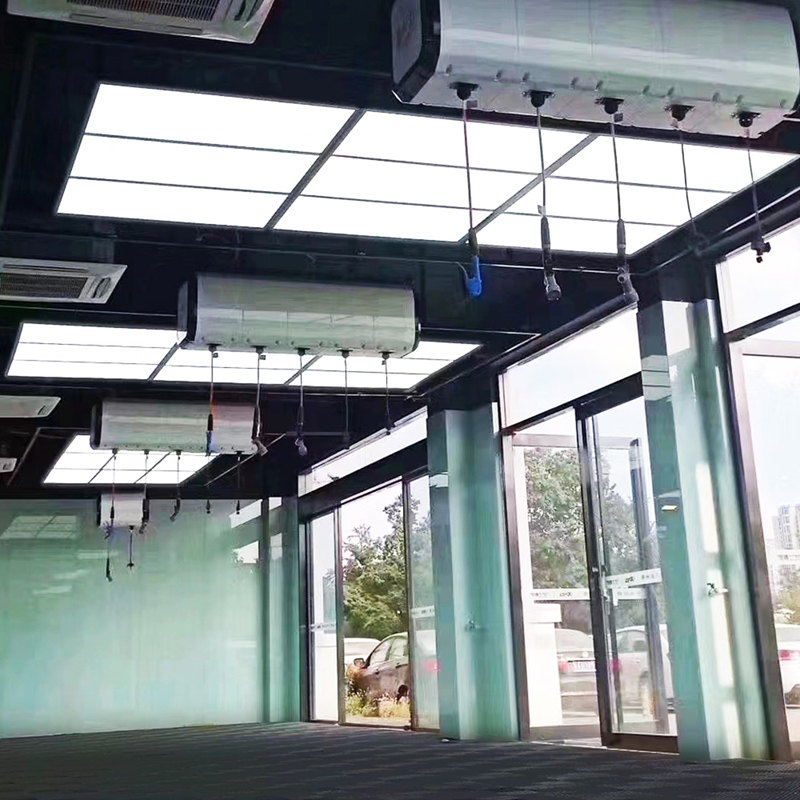
Luminous efficacy measures lumens per watt. This serves as the primary metric for evaluating efficiency. You must look beyond simple wattage. Wattage only tells you the energy consumed, while lumens tell you the actual light delivered. High efficacy panels deliver more light while drawing less power. This keeps operational costs low while maximizing visibility.
Determine necessary lux levels based on specific tasks. General assembly requires different illumination than micro-electronics. You must match the output to the visual demand of the work. Use a lux meter at the work surface height to verify you meet the required foot-candles.
| Workspace Type | Recommended Lux Level | Ideal CCT Range | Primary Visual Task |
|---|---|---|---|
| Warehouse Storage | 150 - 200 Lux | 4000K | Navigation and label reading |
| General Assembly | 300 - 500 Lux | 4000K - 5000K | Tool handling and parts sorting |
| Quality Inspection | 750 - 1000 Lux | 5000K | Defect identification |
| Micro-Electronics | 1000 - 1500 Lux | 5000K+ | Precision soldering and wiring |
| Break Rooms | 150 - 300 Lux | 3000K - 3500K | Rest and visual recovery |
Compare the structural advantages of different form factors. A 2x2 square LED ceiling light fits easily into standard T-bar grids. It provides excellent symmetrical light distribution. Rectangular 2x4 panels cover more area per fixture. They often require fewer total units for a large room.
Grid compatibility dictates your spatial distribution of light. You must calculate the number of fixtures needed for uniform floor coverage. Square panels often provide better modularity in complex ceiling layouts. They allow for tighter spacing where high lux levels are required. Rectangular panels excel in long corridors or open warehouse aisles.
A CRI of 80+ is standard for general workspaces. It provides adequate color recognition for basic tasks. However, a CRI of 90+ is mandatory for tasks requiring strict color differentiation. Wiring assembly, painting, and quality control demand high CRI. High CRI panels reveal the true color of objects, specifically focusing on the R9 value for accurate red rendering.
High CRI directly reduces cognitive load. Workers spend less time deciphering visual details. They do not have to guess if a wire is red or orange. This immediate recognition saves mental energy. They sustain productivity longer into their shifts. High CRI lighting makes the workspace feel more natural and vibrant.
Automotive detailing requires flawless visibility. Quality assurance inspections demand the same visual clarity. These represent extreme examples of shift work. Detailers often work long hours under intense scrutiny. Missing a single scratch ruins the final product. Standard overhead lighting obscures flaws and washes out the surface.
An LED detailing light panel reveals micro-marring. It exposes swirl marks and subtle paint defects. The high CRI and intense, focused lumens cut through clear coats. Detailers can see the exact condition of the paint. This precision lighting prevents rework and ensures quality control standards are met on the first pass.
Analyze your placement strategy for car detailing shop lights carefully. You must combine overhead panels with wall-mounted units. This multi-angle approach eliminates shadows completely. Shadows hide defects. A vehicle must be illuminated from all sides.
The diffused, high-lumen output of LED panels prevents the washout effect. Highly reflective surfaces, like polished hoods, remain clear. Detailers do not suffer from glare-induced fatigue. The light spreads evenly across the curvature of the vehicle. This allows for hours of meticulous machine polishing without eye strain.
Calculate the maintenance labor savings of modern fixtures. Units rated for 30,000 to 50,000 hours drastically reduce replacement frequency. You stop paying maintenance crews to change burnt-out tubes. Premium fixtures feature superior thermal management. High-quality extruded aluminum heat sinks pull heat away from the diodes. This thermal efficiency pushes lifespans well beyond the 50,000-hour mark, often achieving L70 ratings of 100,000 hours.
Avoiding lift-equipment rentals offers immense operational value. Changing high-bay or ceiling grid lights requires scissor lifts. This disrupts the production floor. Workflow interruptions decrease significantly in 24/7 facilities. You install the panels and let them run for years without intervention.
Compare the upfront unit cost against long-term reductions. Premium panels require a higher initial investment. However, the direct electrical consumption drops immediately. LEDs convert a much higher percentage of energy into light, rather than heat.
This lower heat emission reduces HVAC cooling loads. Your air conditioning system works less to maintain a comfortable temperature. The combined savings from lower lighting bills and reduced HVAC usage create a rapid payback period. The operational efficiency funds the upgrade itself over time.
Identify the structural risks of retrofitting existing troffers. Ballast bypass complications often arise with older fixtures. Wiring degradation poses severe fire hazards. Simply snapping a Type B LED tube into an old housing is risky. The existing tombstones may be brittle or damaged.
Sometimes installing entirely new panel fixtures proves safer. It guarantees all components are modern and compatible. It eliminates the risk of old ballasts failing and causing shorts.
Address the initial cost barrier of upgrading massive facilities. Replacing hundreds of fixtures requires significant capital. Suggest mitigation strategies to management. Phased rollouts allow you to upgrade zone by zone. You spread the cost over several quarters.
Leverage local utility rebates to offset expenses. Many power companies offer cash incentives for switching to high-efficiency LEDs. Calculate the break-even point accurately. Factor in energy savings, maintenance reductions, and productivity gains. Reduced error rates and lower absenteeism hold real financial value. Include these metrics in your upgrade proposal.
Meeting OSHA lighting standards is an absolute necessity. Specific work environments require strict adherence to minimum foot-candle levels. Failing to meet these standards results in fines and liability issues. Verify that your chosen panels carry proper certifications.
Look for UL, DLC, or CE marks. These certifications ensure the panels meet commercial safety and performance benchmarks. DLC Premium listed panels often qualify for higher utility rebates. They undergo rigorous testing for efficacy, color quality, and longevity. Do not install uncertified fixtures in a commercial environment.
A: It eliminates the low-frequency flicker common in fluorescent tubes. High-quality drivers provide a steady stream of light, allowing eye muscles to relax. The diffused panel design also spreads light evenly, reducing harsh glare and preventing the rapid pupil adjustments that cause tension headaches.
A: The 4000K to 5000K range is ideal for active work areas. This cooler, daylight-mimicking spectrum actively suppresses melatonin production. It helps workers maintain mental alertness, sustain focus, and process visual information faster during long or overnight shifts.
A: Yes, standard 2x2 square panels are designed for seamless integration into conventional T-bar grid ceilings. They are lightweight and typically feature simple plug-and-play wiring connectors, making it fast and easy to replace older, bulky fluorescent troffer fixtures.
A: Detailing requires flawless visibility. LED panels offer high CRI, which ensures accurate color representation. Their diffused, high-lumen output cuts through clear coats to reveal micro-marring and paint defects without causing blinding glare on highly reflective vehicle surfaces.
A: Commercial panels typically last between 30,000 and 50,000 hours. Premium fixtures with superior aluminum heat sinks and high-quality drivers can exceed 50,000 hours. Proper thermal management prevents the diodes from overheating, which is the primary cause of premature failure.
A: LEDs have a very high energy-to-light conversion rate. They emit significantly less ambient heat compared to legacy lighting. This keeps the workspace cooler, improves worker comfort, and noticeably reduces the strain and energy consumption of the facility's HVAC system.
A: Absolutely. Daylight-mimicking LED lighting supports natural circadian rhythms, reducing cognitive fatigue. When workers are not struggling with eye strain or melatonin-induced lethargy, their spatial awareness improves, and their verbal and physical task response times remain sharp throughout the entire shift.


