


Views: 0 Author: Site Editor Publish Time: 2026-09-27 Origin: Site


Commercial vehicle launches operate in a high-stakes environment. First impressions dictate media coverage, dealership momentum, and buyer perception the moment the cover drops. Traditional showroom lighting often falls short during these critical events. Static fixtures lack the dynamic punch needed for a major reveal. Conversely, temporary concert-style event lighting introduces prohibitive costs. Complex rigging demands extensive labor, specialized crews, and significant time. Event coordinators constantly seek a better middle ground. Modular lighting grids provide a highly effective hybrid solution. Their architecture simplifies installation while delivering massive visual impact. Programmable color dynamics offer precise environmental control over the showcase area. Automotive marketers actively evaluate these systems to highlight vehicle reveals seamlessly. You will learn how to deploy these grids effectively for your next launch. We cover technical control, structural requirements, and critical photographic considerations to ensure your event executes flawlessly.
Building anticipation requires precise timing and environmental control. The primary objective of launch lighting centers on directing audience focus. You must guide the viewer's eye directly to the vehicle. Highly shareable visual assets drive press coverage and social media engagement. Poor lighting yields flat, uninspiring photographs. Dynamic illumination creates depth and highlights the vehicle's character lines. Success means delivering a flawless visual presentation under intense scrutiny. Every luminaire must contribute to the overall narrative of the reveal. When setting up a dealership floor, we look at the ambient light bleed from street windows. We measure the foot-candles hitting the center stage. If the center stage does not read at least three times brighter than the surrounding floor, the vehicle gets lost in the room. You need high-output fixtures to punch through that ambient wash.
Dynamic lighting elevates the physical space instantly. It transforms a standard reveal into an immersive, multi-sensory experience. Visual cues must align perfectly alongside the event's auditory elements. Sudden color shifts build tension before the drop. Pulsing sequences match the tempo of the introduction music. This synchronization captivates the audience entirely. The environment feels alive and reactive to the presentation. Attendees remember the feeling of the room just as much as the vehicle itself. I have run shows where the bass drop triggers a full-grid strobe effect. The crowd reaction is immediate and visceral. You cannot achieve that level of engagement with static high-bay LEDs. You need fixtures that respond instantly to control commands without lag.
Large open environments like convention centers swallow standard displays. Dealership floors often lack a dedicated presentation stage. The geometric pattern of customizable RGB hexagon lights solves this spatial problem. The grid creates a distinct, illuminated halo above the car. This defined stage area anchors the vehicle firmly in the space. It establishes a clear boundary between the audience and the product. The ceiling structure visually frames the automobile from every angle. This framing technique naturally draws attention inward toward the center. We often suspend a 15-foot by 10-foot grid directly over the primary turntable. This creates a virtual room within a room. The sharp angles of the hexagons contrast with the smooth curves of modern automotive design, creating a striking visual dynamic.
Programmable color sequences match OEM brand guidelines exactly. You can tailor the atmosphere to the specific identity of the manufacturer. Launching an electric vehicle often utilizes cool blues and crisp whites. Performance models benefit from aggressive reds and deep oranges. You can also match the specific colorway of the newly launched vehicle. This creates a cohesive, monochromatic environment right before the reveal. Color psychology influences how the audience perceives the vehicle's intended market segment. Strategic color choices reinforce the marketing message silently but powerfully. If a brand uses a specific Pantone blue, we program the controller to hit those exact RGB values. Consistency across the physical space and the digital broadcast is non-negotiable.
Lumen output matters immensely in commercial event spaces. Hexagon grids must remain visible against extremely high ambient light. Press events typically feature intense background illumination from video walls. Calculate the required lumens per square foot carefully before specifying fixtures. Weak diodes wash out entirely under convention center spotlights. You need high-output modules to maintain the geometric visual impact. The grid must cut through the environmental light to command attention. Proper brightness ensures the structural pattern reads clearly on camera. We aim for a minimum of 120 lumens per watt from the fixture. When calculating the total output, factor in the diffusion lens. A heavy frosted lens reduces glare but cuts total output by up to 20 percent. You must compensate for this loss during the design phase.
Standard RGB diodes struggle to render true automotive paint colors. Metallic flakes and pearl finishes look flat under pure RGB illumination. This creates a significant Color Rendering Index (CRI) dilemma for marketers. You cannot sacrifice paint accuracy for dramatic lighting effects. Pure red, green, and blue diodes lack the broad spectrum needed. We recommend specifying RGB+W (White) or RGB+CCT fixtures exclusively. High CRI (>90) white light ensures accurate color representation. Post-reveal inspection phases demand this clarity for journalists and buyers. A dual-lighting strategy handles both the dramatic intro and the detailed inspection. During the reveal sequence, we run pure RGB chases. The moment the presentation ends, we crossfade to the dedicated white diodes. This gives photographers the perfect 5600K daylight balance they need to capture the metallic flake accurately.
Control systems dictate the fluidity of your event synchronization. Prosumer controllers feature built-in sound-sensitive functions. Integrated microphones capture ambient audio effectively from the environment. They detect the vehicle engine revving or the launch soundtrack seamlessly. color changing hexagon lights change colors following the music automatically. They pulse in perfect synchronization with the beat. This elevates the atmosphere significantly for smaller dealership reveals. It provides a high-end feel without requiring a dedicated lighting technician. We often hide the microphone near the primary PA speakers to ensure a clean audio trigger.
Large-scale auto shows require robust DMX512 compatibility. You must program the ceiling grid into the master lighting console. This allows frame-accurate synchronization alongside moving heads and video walls. DMX integration treats each hexagon segment as an individual pixel. Lighting designers can sweep colors across the grid directionally. This level of control is mandatory for arena-sized vehicle launches. It ensures the hexagon grid acts as a cohesive part of the production. We map the grid using Art-Net or sACN protocols to handle the high channel counts. A standard 20-hexagon grid can consume over 180 DMX channels if you want individual edge control. You need a console capable of handling multiple universes to run these setups properly.
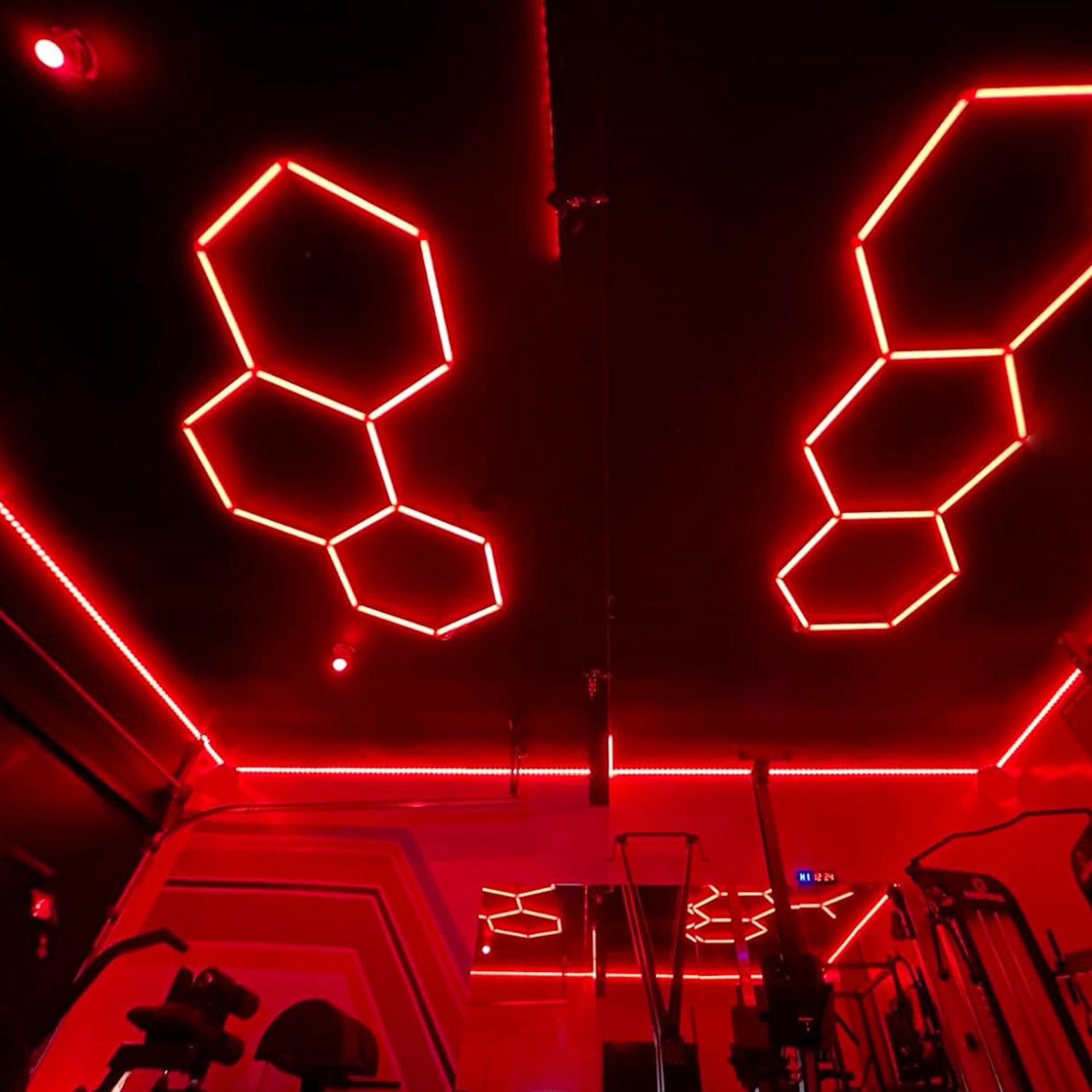
Compare procurement and installation costs carefully. Modular hexagon grids eliminate the need for heavy aluminum trussing. Renting traditional par cans and moving lights drains budgets quickly. You must pay specialized riggers to fly heavy truss systems safely. Hexagon grids utilize lightweight polycarbonate housings. The overall material cost drops significantly compared to concert-grade fixtures. Labor costs decrease because assembly requires fewer specialized tools. You own the asset afterward, unlike expensive multi-day rental contracts. A typical 12x12 box truss setup requires four chain motors, a motor controller, and a certified rigger. That alone eats up thousands of dollars before you even hang a single light. The modular grid bypasses this entirely.
Assembly time heavily favors plug-and-play modular connectors. Running individual power and data cables for traditional fixtures consumes hours. Each moving head requires dedicated home runs to the dimmer beach. RGB hexagon lights deploy rapidly using integrated linking cables. Teams snap the geometric shapes together on the floor. They lift large pre-assembled sections into place simultaneously. This setup velocity proves crucial during tight venue load-in windows. Faster installation means more time dedicated to programming and rehearsals. We can assemble a 20-foot grid with a three-person crew in under four hours. A comparable traditional lighting rig takes a six-person crew an entire 10-hour shift to fly, cable, and focus.
Pair RGB hexagon ceiling lights alongside RGB hexagon wall lights for maximum impact. This strategy creates a continuous, immersive light tunnel. The vehicle sits entirely enveloped within the geometric pattern. This immersive backdrop enhances depth for professional videography. Cameras capture dynamic reflections across the vehicle's clear coat. The 3D enclosure separates the showcase from the rest of the venue. It creates a distinct micro-environment dedicated solely to the new model. We build custom freestanding frames using 80/20 aluminum extrusion to support the wall sections. This allows us to place the vertical grids exactly where the camera operator needs them for the best reflection angles.
| Feature | Traditional Event Rigging | Modular Hexagon Grids |
|---|---|---|
| Structural Weight | Extremely heavy; requires aluminum truss and chain motors. | Lightweight; suspends easily via aircraft cable. |
| Setup Velocity | Slow; requires individual power and DMX runs per fixture. | Fast; utilizes plug-and-play modular connectors. |
| Visual Style | Industrial, concert-style appearance. | Modern, geometric, and integrated architectural look. |
| Labor Requirements | Certified riggers and master electricians required. | Standard AV technicians or trained dealership staff. |
| Post-Event Utility | Returned to rental house; zero retained value. | Reconfigurable for permanent showroom display. |
Suspending large interconnected grids introduces distinct structural risks. Standard acoustic drop ceilings cannot support the combined weight. The grid will warp or collapse if anchored improperly. Utilize high-tensile aircraft cable for secure suspension. Anchor these cables directly to primary structural steel above the ceiling. Calculate the total grid weight against the venue's ceiling load capacities. Distribute the suspension points evenly across the geometric pattern. This prevents sagging and maintains perfectly straight light lines. We use 1/16-inch galvanized wire rope with adjustable grippers. This allows us to level the grid perfectly using a laser level. You must check the deflection of the polycarbonate tubes. If you space the suspension points too far apart, the tubes will bow under their own weight.
High-density fixtures draw significant amperage when displaying full white. Voltage drop across large grids causes noticeable color shifting. The modules furthest from the power supply will appear dim or yellowed. You must plan for multiple power injection points. Segment the grid into distinct electrical zones. Assign dedicated power supplies to each specific zone. Calculate the total wattage and ensure your circuits can handle the continuous load. Never daisy-chain more modules than the manufacturer specifies. For a 24V system, we inject power every 15 linear feet of lighting tube. We run 14 AWG low-voltage wire along the top of the grid to distribute power evenly. This guarantees that a pure white cue looks identical on the first tube and the fiftieth tube.
LED flicker ruins press photography completely. Slow-motion video captures severe banding from low-quality diodes. The camera shutter speed clashes with the LED refresh rate. You must specify high-frequency PWM (Pulse Width Modulation) drivers in your fixtures. Look for drivers operating above 3000Hz to ensure camera-safe lighting. Test the fixtures with cinema cameras before finalizing the purchase. Clean media capture is the primary goal of the launch event. Do not compromise on driver quality under any circumstances. We always bring a RED or ARRI cinema camera to the shop to test new fixtures. We shoot at 120 frames per second with a tight shutter angle. If we see any rolling bands on the monitor, we reject the fixture immediately.
Crowded press events generate massive RF interference. Thousands of smartphones and wireless microphones compete for bandwidth. Wi-Fi or Bluetooth controllers drop connections frequently in these environments. A dropped connection during the vehicle reveal is catastrophic. Advocate strongly for hardwired data connections. Run physical DMX cables from the lighting console to the grid controllers. Hardwired systems guarantee reliable execution when the cue is called. Leave wireless control for permanent, low-stakes showroom installations. We use shielded 5-pin DMX cables for all data runs. We also install an opto-splitter at the base of the grid to isolate the data signal. This prevents a short circuit in one tube from taking down the entire data network.
Shortlist vendors using strict commercial criteria. Demand comprehensive warranties covering individual node replacements. Ensure the fixtures carry proper UL or CE certifications. Fire marshals will inspect the installation at major convention centers. Uncertified electronics will be shut down immediately. Verify that replacement nodes remain readily available domestically. Customer support responsiveness dictates your ability to recover from hardware failures. Choose manufacturers who understand the demands of live event production. We ask vendors for their failure rate data. We want to know exactly how many power supplies fail within the first 100 hours of operation. We also check the gauge of the internal wiring. Cheap fixtures use thin wire that overheats during long events.
Modular grids offer excellent scalability and post-event utility. Break down the massive launch grid after the press event concludes. Reconfigure the components into smaller, static displays. Install these smaller grids over specific vehicles in the dealership showroom. This strategy maximizes your initial return on investment. The lights continue working to draw foot traffic long after the launch. You can expand the system later by purchasing additional matching modules. This flexibility makes them a superior long-term asset. We recently took a 40-foot launch grid and split it into four 10-foot sections. We installed these sections in the service drive lanes of the dealership. The bright, even light improved visibility for the service technicians while maintaining a high-end aesthetic for the customers.
A: Pure RGB diodes struggle to render metallic and pearl automotive paints accurately. They lack the broad color spectrum required for true color rendering. You must specify RGB+W or RGB+CCT fixtures. These include dedicated high-CRI white diodes. This ensures the vehicle's true paint code displays accurately during post-reveal inspections.
A: Large venues utilize DMX controllers to sync the lights via a master console. For smaller setups, app-based controllers feature built-in sound-sensitive microphones. These capture ambient audio, allowing the grid to change colors and pulse following the music automatically.
A: No, standard acoustic drop ceilings cannot support the weight of large interconnected grids. You must bypass the drop ceiling grid entirely. Use aircraft cable to anchor the suspension points directly to the building's primary structural steel.
A: Yes, they utilize the same modular components and voltage requirements. However, you must calculate the total electrical load carefully. Large continuous setups require multiple power injection points to prevent voltage drop and color shifting across the panels.
A: Low-quality fixtures will cause severe banding in photos and slow-motion video. You must specify fixtures equipped with high-frequency PWM (Pulse Width Modulation) drivers. Drivers operating above 3000Hz ensure the lighting remains completely camera-safe.
A: Physical size is virtually unlimited, but electrical limits apply. Voltage drop restricts how many modules can run from a single power source. Massive grids require segmented power zones and multiple data injection points to function correctly.


