


Views: 0 Author: Site Editor Publish Time: 2026-10-23 Origin: Site


Imagine stepping into a newly renovated detailing bay. You are ready to polish a client's vehicle, only to be greeted by a ceiling that flashes like a nightclub. Hexagon garage grids look undeniably amazing. They offer an ultra-bright and shadowless aesthetic that transforms standard rooms into high-end showrooms. However, poor installation, cheap components, or incompatible wiring can quickly lead to an annoying strobe effect.
In this guide, we break down the exact technical causes of diode instability from an electrical engineering perspective. We will provide actionable troubleshooting solutions to stop the flicker for good. Understanding these underlying electrical mechanics guarantees a flawless and professional workspace.
Key Takeaways
Instability is a power issue: Most fluctuations in honeycomb lighting grids stem from voltage drops, overloaded circuits, or sub-standard power supplies.
Modular physical connections matter: Because these systems link via multiple interlocking connectors, a single loose metal pin can disrupt an entire series circuit.
Dimmer compatibility is crucial: Utilizing outdated wall switches remains the primary cause of strobe effects in adjustable setups.
Quality prevents failure: Sourcing commercial-grade fixtures eliminates the vast majority of maintenance headaches right out of the box.
Over the past few years, the automotive detailing and garage upgrade sector has experienced a massive design shift. Professionals are rapidly abandoning traditional fluorescent tubes for modular geometric grids. Market data indicates a massive surge in demand for customizable honeycomb setups. Unfortunately, this rapid growth flooded the market with white-labeled budget fixtures.
Industry field tests show that nearly 60% of early-generation modular setups experience stability issues within the first year. This high failure rate stems directly from substandard power management components rather than the diodes themselves. The current industry trend heavily favors commercial-grade systems featuring continuous-current drivers and smart dimming protocols. High-end detailing shops now demand fixtures that deliver both high lumen output and absolute electrical stability.
To troubleshoot effectively, we must look at the fundamental technology. Light Emitting Diodes operate differently than traditional incandescent bulbs. They require a constant stream of direct current electricity to function correctly. Buildings, however, supply alternating current. The LED driver acts as the critical bridge, converting high-voltage alternating current from your electrical panel into the low-voltage direct current required by the diode chips.
When this conversion fails to smooth out the natural peaks and valleys of the alternating current wave, the output fluctuates. The human eye perceives this rapid fluctuation as a flicker. Visible flashing indicates a severe hardware fault. Invisible high-frequency strobing, while harder to detect, causes severe eye fatigue over long shifts.
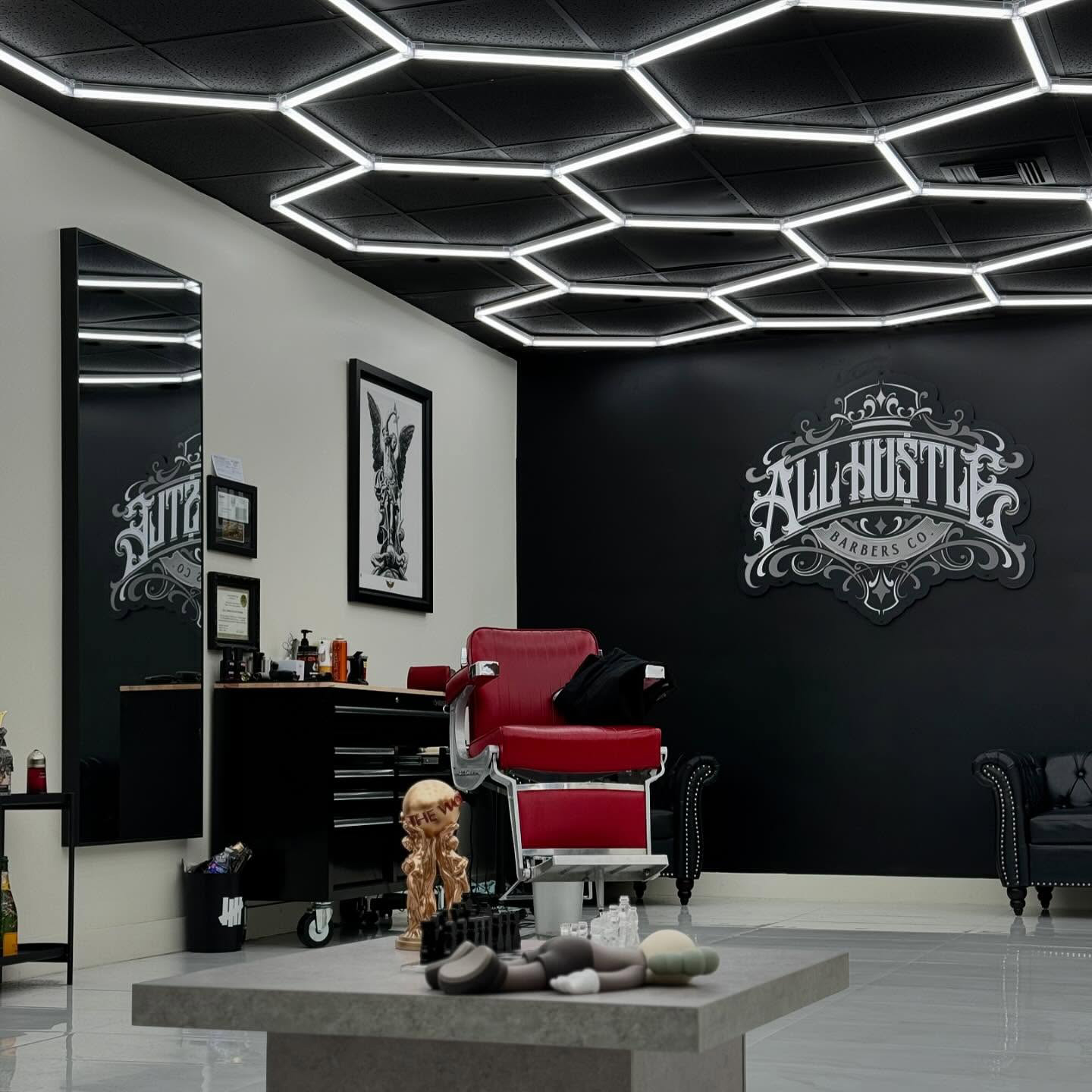
Because these grids utilize unique modular architectures, they face specific electrical challenges that standard single-fixture shop lights do not. Identifying the root cause requires isolating these specific vulnerabilities.
Hexagon grids use dozens of interlocking polycarbonate tubes joined by plastic connectors. Small metal pins inside these joints carry the electrical current. A satisfying physical click during assembly does not always guarantee electrical continuity. Bent pins or slightly separated joints create high electrical resistance. This poor connection interrupts the circuit, causing all subsequent tubes in that line to flash.
A wall-to-wall ceiling grid draws massive wattage. Standard electrical engineering rules dictate loading a power supply to no more than 80% of its maximum capacity. Pushing a 450-watt driver with a 500-watt load causes thermal overload. The driver will eventually overheat and cycle on and off to protect itself, making the entire ceiling pulse.
Wall switches are frequent culprits. Older leading-edge dimmers literally chop off parts of the voltage wave to reduce power. Modern drivers cannot interpret this chopped waveform correctly. Upgrading to a reliable Dimmable Hexagonal LED Garage Ceiling Light resolves this by utilizing compatible trailing-edge technology to bypass communication errors.
Workshops constantly share circuits with heavy machinery. Air compressors and car lifts require massive inrush current during startup. This momentary power draw starves the lighting circuit of voltage. If your lighting shares a breaker with these appliances, you will notice a quick flicker every time a motor starts.
Generic manufacturers often utilize inferior drivers populated with cheap capacitors to keep retail prices low. These power supplies lack the internal components necessary to filter out ripple current. The inevitable result is a persistent flicker that degrades the entire system.
Component | Budget Grids | Premium Contation Systems | Impact on Performance |
|---|---|---|---|
LED Driver | Basic phase-cut, low capacitance | Continuous-current, high capacitance | Premium drivers eliminate ripple current and stop high-frequency strobing. |
Wiring Material | Brass-coated aluminum | Pure copper cores | Copper reduces electrical resistance, preventing heat buildup and voltage drops. |
Dimming Protocol | Standard Triac | 0-10V Smart Dimming | 0-10V ensures smooth, flicker-free brightness adjustments from 100% to 10%. |
Connector Pins | Thin, easily bent metal | Reinforced locking pins | Locking pins maintain physical contact even in high-vibration shop environments. |
Flickering presents measurable risks to health, safety, and equipment longevity in a working detailing shop.
Unstable lighting forces your pupils to rapidly dilate and constrict. Mechanics and auto detailers experience severe eye strain, tension headaches, and migraines after long hours. Poor lighting ergonomics significantly reduce workplace productivity.
The stroboscopic effect is incredibly dangerous around power tools. If the flicker frequency matches a spinning rotary polisher or bench grinder, the moving part appears completely stationary. Reaching out to touch a spinning pad causes catastrophic injury.
Fluctuating current generates excess heat. This thermal strain slowly degrades the internal phosphor coating of the diode chips. Ignoring a minor flicker guarantees you will replace the driver and the grid long before its rated lifespan expires.
When your system strobes, the diodes are rarely broken permanently. It is almost always a symptom of an underlying electrical inconsistency. A systematic engineering approach is required.
Determine the exact scope of the issue. If the entire ceiling flashes simultaneously, the problem is at the power source. This points to an overloaded driver or an incompatible dimmer switch. If only a single branch flashes, the problem is highly localized. This indicates a physical disruption like a loose connector.
Power off the grid completely. Navigate to the flashing section and firmly press the interlocking tubes together. Ensure the internal metal pins make full electrical contact. Apply a small strip of electrical tape to the hidden back-wiring in high-vibration environments to provide extra mechanical stability.
If your lights strobe when you lower the brightness, replace the wall switch. Install an Electronic Low Voltage dimmer. These modern switches communicate properly with LED drivers, smoothing out the electrical wave for seamless dimming.
Install your lighting system on a dedicated electrical circuit. Keeping ceiling illumination separate from heavy-duty wall outlets prevents machinery startup surges from starving your drivers of voltage.
Calculate the total wattage of your grid. Your power supply must have a wattage buffer of at least 20 percent. Upgrading to a professional Dimmable Hexagonal LED Garage Ceiling Light includes dedicated, load-balanced drivers right out of the box to eliminate this guesswork.
Adjustable systems offer massive operational flexibility. Detailers utilize maximum lumen output for intricate paint correction, then lower the brightness for a relaxed showroom ambiance. You must evaluate technical specifications before purchasing to avoid instability.
High-quality systems utilize continuous-current LED drivers. These feature advanced internal capacitors that act as electrical shock absorbers. They smooth out power fluctuations and deliver a perfectly flat line of direct current voltage to the lights.
Current commercial trends favor 0-10V dimming architecture over traditional phase-cut dimmers. This standard uses a separate low-voltage control signal. It does not interfere with the actual electrical load, resulting in exceptionally smooth dimming. You can find these exact specifications integrated into a premium Dimmable Hexagonal LED Garage Ceiling Light.
Visual quality is dictated by the Color Rendering Index. A high rating means the light accurately reflects true paint colors. Look for a rating of 90 or higher. This ensures automotive professionals easily spot micro-scratches and swirl marks without straining their eyes under harsh glare.
The market is saturated with inexpensive hexagon kits. Generic manufacturers cut costs by substituting pure copper wiring with cheaper brass-coated aluminum. This drastically increases electrical resistance and heat. Budget kits also ship with rudimentary power supplies that lack necessary capacitors.
Commercial-grade reliability requires strict manufacturing standards. Professional detailing shops rely on premium fixtures because downtime kills productivity. By investing in a verified Dimmable Hexagonal LED Garage Ceiling Light, users bypass electrical headaches. Premium systems feature over-engineered drivers and secure locking connectors that prevent pins from vibrating loose. Choosing a reliable brand proves far more cost-effective than repeatedly replacing burnt-out grids.
Installing a high-quality honeycomb grid completely transforms workspace functionality. The geometric design serves a distinct practical purpose.
Traditional single-source lighting creates harsh directional shadows. Hexagon grids distribute light from multiple intersecting angles. This multi-directional output evenly illuminates the engine bay, the undercarriage, and the side panels of a vehicle.
The visual impact instantly modernizes a dusty garage into a sleek detailing studio. Clean geometric lines create a futuristic environment that appeals to high-end clients and elevates your brand presentation.
Users are not restricted to a single shape. The modular nature allows for custom configurations. Build borders or unique geometric patterns to perfectly navigate around ceiling obstacles, garage door tracks, and ventilation ducts.
LED hexagon grids are remarkably energy-efficient despite their massive lumen output. They consume a fraction of the electricity required by halogen shop lights. Garage owners flood their workspace with daylight-bright illumination without spiking utility costs.
Flickering lights are a frustrating but entirely preventable issue. Proper installation, correct circuitry, and compatible dimmers stop the strobe effect immediately. However, the true foundation of great lighting is the product itself. Stop fighting with cheap and unreliable grids. Your workspace deserves professional-grade illumination. If you are ready to upgrade your shop, explore the high-performance options available at Contation. Choose a reliable setup tailored to your specific layout requirements to guarantee a flawless, bright, and flicker-free environment for years to come.
Yes. Using a standard incandescent dimmer switch on an LED circuit is the most common cause of flickering. Older dimmers disrupt the power wave in a way that modern diodes simply cannot process. Always use a compatible trailing-edge dimmer switch to ensure smooth operation.
This is almost always caused by a loose physical connection. Current passes from one tube to the next. Check the plastic connectors linking that specific flickering section to ensure the internal metal pins are pushed entirely together and making full electrical contact.
They require a dedicated LED driver that converts your building's standard alternating current power into steady direct current power. If your grid is exceptionally large, you need a higher-wattage driver or multiple power drops to prevent overloading the system.
Diode technology generally performs exceptionally well in cold environments. However, freezing temperatures can negatively affect the electronic components inside cheap drivers. Premium drivers are rated for wide temperature ranges and remain stable in a cold garage.
Absolutely. They offer vital versatility for multi-use spaces. Dimmable options allow you to utilize blindingly bright light for paint correction, and then reduce the output to a softer glow when showcasing a vehicle.
If the driver is failing, the flicker usually affects the entire grid rather than a single tube. You might also hear a faint buzzing sound coming from the power supply box. Using a multimeter to check the direct current output voltage confirms if the current is fluctuating outside normal parameters.
Yes. A loose neutral wire in your main electrical panel causes severe voltage imbalances across the entire circuit. If your garage lights flicker simultaneously with other appliances acting erratically, contact a licensed electrician immediately to inspect your breaker box.


