


Views: 0 Author: Site Editor Publish Time: 2026-05-27 Origin: Site


Upgrading conventional commercial spaces often requires extending uniform lighting into incredibly demanding environments. High humidity, heavy condensation, and direct water exposure create unique structural challenges for any electrical infrastructure. Standard edge-lit or back-lit LED panels are engineered exclusively for climate-controlled, completely dry environments. Deploying these standard fixtures in moisture-prone areas predictably leads to rapid driver failure, voided warranties, and severe electrical shock hazards.
Fortunately, you can safely deploy a high-quality Ceiling Panel Light in wet or damp locations. However, this is only successful if the fixture's structural engineering, UL/ETL certifications, and Ingress Protection (IP) ratings align perfectly with specific environmental demands. We will explore how to confidently evaluate ratings, identify ideal deployment zones, and execute smart installation strategies without violating strict building codes.
Damp and Wet are not interchangeable: NEC and UL define these environments strictly; using a damp-rated panel in a wet zone violates building codes and poses a fire risk.
Marketing labels mean nothing: "Waterproof" or "weather-resistant" are marketing terms. Buyers must look for explicit UL/ETL Damp or Wet Location listings.
Dynamic environments dictate ratings: A commercial kitchen might be classified as "Dry," "Damp," or "Wet" depending entirely on the exhaust ventilation efficiency and cleaning protocols (e.g., hose-downs).
Strategic placement lowers costs: Facilities can safely mix-and-match fixture ratings within the same room based on direct exposure zones to optimize procurement budgets.
Navigating commercial lighting upgrades requires a strict adherence to established safety codes. Electrical inspectors do not evaluate moisture protection based on visual appearance. They rely entirely on independent testing laboratories and standardized definitions.
The National Electrical Code (NEC) provides the fundamental baseline for safe installations. Specifically, NEC Article 410 dictates how lighting fixtures (luminaires) must be installed in damp or wet locations. This code mandates strict isolation between electrical components and moisture sources. Inspectors use this article to classify the ambient moisture levels of permanent lighting installations. They assess whether a specific room design introduces occasional condensation or routine water splashing.
Underwriters Laboratories (UL) tests and certifies electrical products against specific hazard thresholds. The UL Damp Location designation serves a very precise purpose.
Criteria: These environments regularly experience moisture accumulation and airborne condensation. However, they remain completely protected from direct water drips, splashes, or pressurized streams. The moisture is ambient rather than direct.
Engineering reality: Damp-rated panels are not watertight. Manufacturers protect them by applying protective conformal coatings directly onto internal circuitry. They also utilize basic moisture seals around the frame. This design successfully resists vapor but fails immediately if submerged or sprayed.
Environments facing aggressive water exposure require an entirely different class of certification.
Criteria: A wet location includes any environment where water can drip, splash, or flow directly against the electrical components. This encompasses both indoor washdown areas and completely unprotected outdoor installations.
Engineering reality: Achieving this rating requires fully sealed housings and thick, continuous silicone gasketed lenses. Interestingly, some commercial wet-rated designs incorporate integrated drain holes. This engineering choice prevents internal water pooling if a seal ever becomes compromised over a decade of use.
Quick Reference: Moisture Ratings Comparison | |||
Rating Type | Primary Threat Level | Structural Protection Methods | Approved Water Exposure |
|---|---|---|---|
Dry Location | Negligible ambient moisture | None required | Strictly prohibited |
Damp Location | Condensation and humidity | Conformal coatings, light gasketing | Airborne vapor only; no direct drips |
Wet Location | Direct spray, drips, and weather | Watertight seals, marine-grade housings | Direct splashes and heavy water flow |
Understanding environmental definitions allows you to map specific lighting hardware to real-world spaces. The goal is achieving safe illumination without overspending on unnecessary watertight features.
Facilities managers can confidently deploy damp-rated fixtures across numerous transitional spaces. When specifying Commercial ceiling panel lights, categorizing the zone correctly prevents premature hardware failures.
Commercial spaces: Damp-rated panels excel in underground parking garages where morning dew collects. You can install them in cold storage buffer zones, large locker rooms, and indoor pool perimeters falling outside the immediate splash zone. Multi-purpose utility rooms housing HVAC equipment also qualify.
Residential and Light Commercial spaces: Damp ratings work perfectly for general bathroom ceilings located outside the shower enclosure. Laundry rooms generating steam and fully covered entrance canopies also demand damp-rated fixtures to handle seasonal humidity shifts safely.
Airflow dictates environmental moisture more than the water source itself. You must treat ventilation as a critical variable. A poorly ventilated locker room can trap massive volumes of steam against the ceiling. This trapped vapor acts as a thermal blanket, elevating ambient temperatures. If steam cannot escape, the condensation levels easily exceed the physical capacity of a damp-rated panel. Moisture infiltrates the tiny gaps in the frame, accelerating diode degradation and ultimately destroying the sensitive internal power supply.
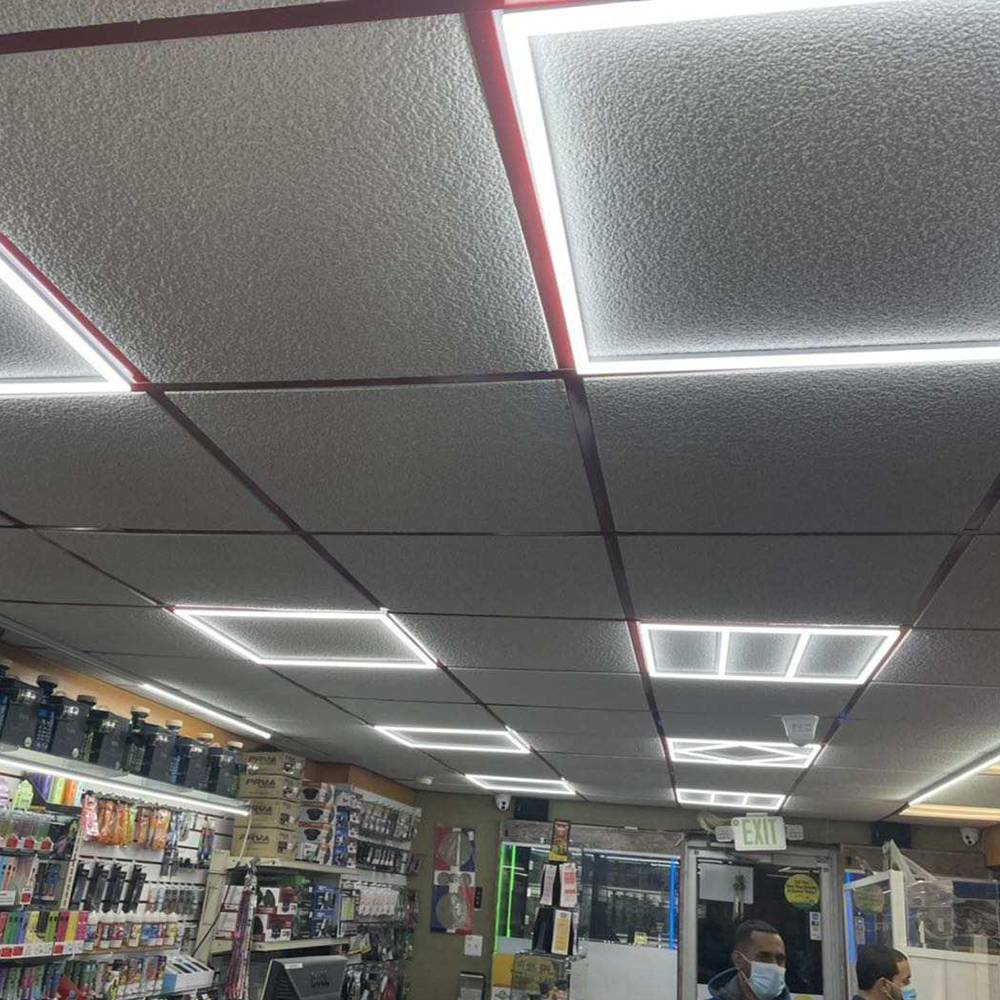
Certain commercial applications push environmental boundaries to the extreme. In these scenarios, compromise is impossible. The structural necessities of wet-rated fixtures become non-negotiable requirements for operational safety.
You must specify fully wet-rated panels whenever water interacts directly with the ceiling plane. Common scenarios include:
Bathing facilities: Any ceiling space directly above showers, bathing enclosures, or commercial spa tubs requires maximum protection from upward-spraying water.
Industrial sanitation: Food processing facilities, commercial meat packing plants, and specialized cleanrooms require intense high-pressure washdowns. Sanitation crews spray water directly onto the ceiling to remove contaminants.
Exterior exposure: Car washes, open-air transit stations, and fully exposed outdoor overhangs subject fixtures to blowing rain, snow, and ice.
Geographic location drastically alters lighting performance. Salt-air environments aggressively corrode standard metals, turning a minor moisture problem into a structural integrity failure. Wet-rated fixtures deployed in coastal zones require additional housing evaluations. You should look for marine-grade aluminum finishes or specialized polymer constructions. Furthermore, coastal facilities require regular physical maintenance. Maintenance teams must wash salt residue off the lenses and trims to preserve the structural integrity of the wet-rated seals.
Professionals never rely on a UL Wet listing alone for extreme environments. You should always cross-reference the UL certification with a specific Ingress Protection (IP) rating to verify exact physical tolerances.
Ingress Protection (IP) Rating Chart for Wet Locations | |||
IP Code | Solid/Dust Protection | Liquid Protection Level | Typical Use Case |
|---|---|---|---|
IP65 | Dust-tight (No ingress) | Protected against low-pressure water jets | Commercial showers, covered transit stations |
IP66 | Dust-tight (No ingress) | Protected against high-pressure water jets | Food processing washdown areas |
IP67 | Dust-tight (No ingress) | Protected against temporary immersion (up to 1m) | Extreme outdoor weather, heavy industrial zones |
The lighting market features misleading terminology designed to accelerate sales. Navigating these claims requires a highly skeptical approach to product specification sheets to prevent costly procurement errors.
Buyers should instantly reject any lighting product claiming to be "waterproof" without providing an observable UL or ETL certification label. "Waterproof" is a marketing term with zero legal or technical definition in the electrical industry. "Weather-resistant" falls into the same dangerous category. Genuine manufacturers proudly display their ETL or UL testing badges directly on the first page of their spec sheets. If you cannot find the independent testing laboratory emblem, the fixture is not safe for moisture-prone areas.
The LED driver acts as the engine of the panel light, and it represents the most vulnerable point of failure. You must evaluate how the manufacturer protects this specific component. Some advanced systems utilize remote drivers mounted entirely outside the wet zone, pushing only low-voltage DC power into the damp space. Other designs feature fully sealed, onboard driver enclosures potted in thermal epoxy. Both methods work, but you need to verify the engineering approach before authorizing a purchase.
Physical inspection of the spec sheet reveals a lot about longevity. Look for seamless extruded aluminum frames. Seams create weak points where water tension pulls moisture inward. Ensure the spec sheet mentions silicone gasketing rather than cheap foam, which deteriorates in high humidity. Finally, verify the lens uses UV-stabilized polycarbonate. Harsh environmental conditions and cleaning chemicals cause substandard plastics to yellow, crack, and eventually shatter.
Procuring the right fixture solves only half the problem. Thoughtful layout planning and rigorous installation practices determine whether the lighting system survives its environment or fails prematurely.
You can map a single room's lighting layout to save substantial amounts of money. Facilities rarely require top-tier ratings across every square inch of a room. For example, in a commercial locker room, you can install premium, high-tier Wet-rated panels directly over the commercial shower blocks. Simultaneously, you can utilize cost-effective Damp-rated panels for the adjacent vanity, locker rows, and changing areas. This mix-and-match strategy optimizes the lighting budget while maintaining rigorous safety standards in direct-exposure zones.
A ceiling panel light is only as waterproof as its physical installation. The space above the ceiling, known as the plenum, often contains distinct air pressures. If contractors fail to create a perfect seal, moist air bypasses the fixture trim entirely. The requirement for contractors to use proper caulking or specialized gasketing between the fixture trim and the ceiling surface cannot be overstated. If humidity enters the ceiling cavity, it will rot the drywall and short-circuit the lighting infrastructure from above.
National codes provide the baseline, but local enforcement supersedes everything. You must acknowledge the local Authority Having Jurisdiction (AHJ). Electrical inspectors have the absolute final say on whether a specific zone demands a Wet or Damp rating. Before committing to mass procurement, share your lighting plan and cut sheets with the local AHJ. This preemptive communication prevents failed inspections and expensive hardware replacements.
Matching a ceiling panel light to a damp or wet location serves as an exercise in strict risk management, rather than just an aesthetic decision. Misjudging the environment invites structural damage, voids hardware warranties, and creates genuine safety hazards.
Audit your environment: Calculate the peak moisture levels, assess daily ventilation capabilities, and identify direct splash zones.
Verify the data: Ignore marketing buzzwords. Demand explicit IP ratings and UL/ETL Damp or Wet Location listings on all manufacturer specification sheets.
Consult the experts: Share your zonal procurement strategy with certified electrical contractors and local inspectors to guarantee full compliance before ordering fixtures.
Demand rigorous installation: Ensure installation teams properly seal the ceiling plenum to protect the infrastructure from upward moisture travel.
A: No. Doing so violates electrical codes, introduces immediate fire/shock hazards, and instantly voids the manufacturer's warranty. Damp-rated fixtures lack the necessary watertight seals to survive direct water exposure.
A: Condensation will bypass the unsealed frame, short-circuiting the LED driver, corroding the internal contacts, and drastically reducing the fixture's lifespan. It poses a severe electrical shock hazard.
A: No. Fixtures under a completely covered porch or awning may only be damp-rated. Uncovered or semi-exposed exterior panels must be wet-rated to withstand blowing rain and direct environmental moisture.
A: Not necessarily. While an IP65 rating indicates strong water resistance, commercial building codes typically require the explicit UL or ETL structural safety certification for full compliance and legal installation.


