


Views: 0 Author: Site Editor Publish Time: 2026-08-18 Origin: Site


High-quality merchandise often fails to convert due to poor retail lighting. Harsh shadows obscure product details. Washed-out colors ruin the aesthetic appeal of premium goods. Customers easily walk past high-margin items simply because they cannot see them properly. For retail managers and store fitters, upgrading to an LED ceiling panel light system goes far beyond basic utility. It acts as a highly strategic visual merchandising decision. Proper illumination fundamentally changes how shoppers perceive inventory value.
In fact, lighting sets the mood and guides customer flow throughout the entire commercial space. This guide evaluates how panel lighting transforms product visibility across your sales floor. We will explore the critical technical metrics required for commercial success. You will also learn practical ways to avoid common implementation risks. By the end, you will understand how to engineer an optimal lighting environment to drive stronger retail conversions.
Poor lighting creates invisible barriers inside retail stores. These problematic "dead zones" hide valuable inventory in dark corners. Customers simply ignore products they cannot see clearly. This artificial darkness significantly lowers the perceived value of premium goods. Effective visual merchandising demands exceptional visibility at all times. Shoppers rely heavily on their eyesight to judge quality before making purchasing decisions.
Investing in specialized lighting directly influences buyer behavior. Bright, welcoming layouts improve foot traffic flow immediately. Shoppers dwell longer in well-lit aisles. They interact more frequently with properly illuminated merchandise. Well-lit stores convey a strong sense of cleanliness and professionalism. Retailers notice immediate positive changes in customer engagement after upgrading outdated fixtures.
Consider a typical grocery store layout. The produce section relies on vibrant colors to signal freshness. When illuminated by outdated fluorescent tubes, tomatoes look dull. Apples lose their natural shine. Upgrading overhead panels transforms this space completely. The natural reds, greens, and yellows pop vividly. Shoppers naturally perceive the produce as fresher and higher quality. This psychological shift directly influences their purchasing volume. They buy more items simply because the products look irresistible.
Retailers must balance ambient light and focused accents carefully. Track lights work perfectly for spotlighting specific endcaps or promotional tables. However, a well-placed ceiling panel light delivers crucial baseline uniformity. It eliminates the harsh shadows typically found around tall gondolas and freestanding displays. You need this balanced approach to maximize sales floor productivity. Ambient lighting fills in the visual gaps left by directional spots. This strategy ensures no product gets lost in the shadows.
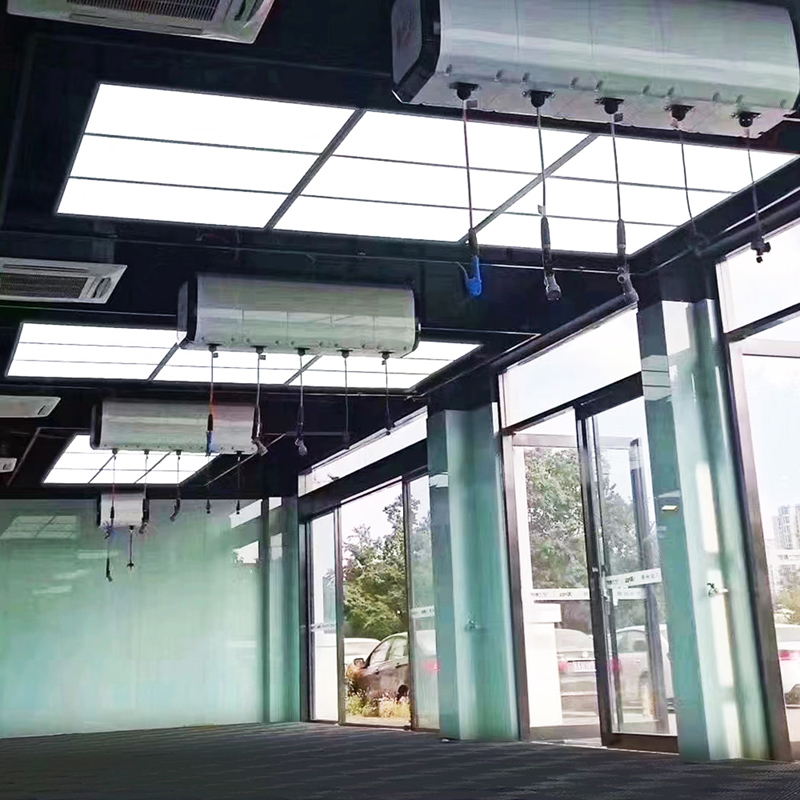
Modern panel designs offer distinct advantages for commercial spaces. They excel at light uniformity and broad diffusion. Edge-lit and back-lit panels both utilize advanced acrylic diffusers. These essential components scatter light evenly across a wide area. This scattering prevents blinding hot spots on glossy packaging or reflective boxes. Uniform diffusion ensures product labels remain easily readable from any angle. Store aisles look remarkably cleaner under evenly distributed light.
Best Practices for Panel Spacing: Maintaining proper spacing between fixtures ensures maximum uniformity. Designers typically recommend a one-to-one spacing criterion based on ceiling height. If your ceiling sits ten feet high, space fixtures ten feet apart. This simple rule prevents unwanted dark spots between lighting zones. It also prevents overlapping light beams from causing excessive floor glare.
Form factor alignment remains equally important for retail applications. The standard square LED ceiling light remains the most scalable choice. Typically measuring two by two feet, it integrates seamlessly into suspended T-bar grid ceilings. This modularity allows store designers to adapt lighting layouts effortlessly. You can easily move panels when rearranging store fixtures or gondolas. The square form factor also provides a clean, geometric aesthetic. It blends perfectly into modern retail ceiling architectures.
Dimmability provides another critical layer of atmospheric control. Modern fixtures feature standard 0-10V dimming capabilities built directly into the drivers. Store managers can adjust brightness levels based on the time of day. Morning shifts might require softer illumination to ease customers into the store. Mid-day peaks usually demand full brightness to combat natural sunlight glare. Dimming minimizes energy waste while maintaining optimal display visibility. It gives you the flexibility to tune the shopping environment dynamically.
Chart: Edge-Lit vs. Back-Lit Panel Comparison
| Feature | Edge-Lit Panels | Back-Lit Panels |
|---|---|---|
| Profile Thickness | Ultra-thin (often under 0.5 inches) | Thicker (usually 1.5 to 2.5 inches) |
| Light Distribution | Extremely smooth and diffuse | Highly direct and powerful |
| Lumen Efficacy | Good baseline efficiency | Superior efficiency (fewer internal losses) |
| Ceiling Clearance | Ideal for very shallow drop ceilings | Requires deeper ceiling plenums |
Understanding exact lighting metrics prevents costly design mistakes. You must evaluate fixtures based on performance data rather than aesthetics alone.
CRI measures how accurately a light source reveals true colors. Commercial retail sets a strict baseline requirement for this metric. You need a CRI of 90+ for optimal visual accuracy. This high rating ensures fabrics, cosmetics, and fresh produce look incredibly vibrant. They appear true-to-life, exactly as customers expect them to look outdoors. Always avoid installing standard CRI 80 panels in retail settings. Lower ratings often make premium products look flat or dull. They can even cast an artificial, unflattering tint over your merchandise. Accurate ceiling lighting reduces customer return rates significantly by setting honest product expectations.
Color temperature dictates the entire atmospheric feel of your store. You must select the right CCT for your specific merchandise.
We can learn a lot from high-performance industrial lighting. Professional car detailing shop lights often utilize 5000K+ temperatures. A dedicated LED detailing light panel must expose microscopic paint defects accurately. Mechanics rely on this intense clarity to perfect their work. Applying this rigorous standard to high-end retail guarantees flawless product visibility. It works exceptionally well for showcasing fine jewelry or intricate artwork. Diamonds sparkle best under high-CCT, high-intensity conditions.
Glare severely impacts customer comfort and visual perception. A Unified Glare Rating (UGR) below 19 is mandatory for retail spaces. High glare actively reduces visual comfort for both shoppers and employees. It causes intense reflective blowouts on glass display cabinets. Glare also makes POS screens unreadable, slowing down checkout times. Squinting customers rarely stay long enough to browse extensively. Selecting low-glare fixtures ensures a smooth, uninterrupted shopping experience. Micro-prismatic diffusers help achieve these critical low-glare targets effortlessly.
Table 1: Recommended Lighting Metrics by Retail Category
| Retail Category | Target CCT | Minimum CRI | Max UGR |
|---|---|---|---|
| High-End Apparel | 3000K | 90+ | < 19 |
| General Grocery | 4000K | 85+ | < 19 |
| Fine Jewelry | 5000K+ | 95+ | < 16 |
| Cosmetics | 4000K | 95+ | < 19 |
Retailers face several practical challenges during major lighting upgrades. Proper planning helps you sidestep these common pitfalls.
Grid compatibility issues often disrupt installation timelines. You must verify existing drop-ceiling grids can support new fixtures. Back-lit panels are slightly thicker and heavier than edge-lit alternatives. Ensure your T-bar grid can handle these specific dimensions safely. Older grid systems might require additional suspension wires for strict safety compliance.
Driver failure represents another major implementation risk. The LED diode itself rarely fails first in commercial settings. The most common point of failure is actually the power driver. Evaluate manufacturers based strictly on driver quality and thermal architecture. Excellent heat dissipation extends the lifespan of the entire fixture. Poor thermal management leads to premature flickering and eventual failure. Always ask suppliers about the specific driver brands they use inside their panels.
Over-illumination creates a sterile, overwhelming environment. Over-populating the ceiling transforms a boutique into a warehouse. True success requires thoughtful layering strategies. Pair ambient panels with directional accent lighting to establish a clear visual hierarchy. Too much uniform light flattens the space visually. It makes the store feel dull despite being brightly lit.
Building compliance remains a non-negotiable step in any commercial renovation. Ensure your chosen panels meet strict local fire safety ratings. You often need IC-rated fixtures if ceiling insulation is present. Verify DLC listings to ensure strict safety code adherence. These listings also unlock access to lucrative local utility rebate programs.
Common Mistakes to Avoid: Many contractors mistakenly ignore existing HVAC vents during layout planning. Placing a panel too close to an air conditioning vent causes issues. Cold air blowing directly on LED fixtures sometimes affects driver efficiency. It can also cause condensation issues in highly humid environments. Always map out your lighting grid alongside your HVAC ductwork carefully.
Follow a structured approach to select the best fixtures for your store. Haphazard purchasing usually leads to disjointed lighting designs. Use these specific steps to guide your procurement strategy.
Upgrading to commercial-grade overhead lighting drastically improves the retail environment. It effectively eliminates frustrating shadows and renders product colors with stunning accuracy. Prioritize fixtures featuring high CRI and low UGR ratings over the cheapest options available. Focus heavily on driver reliability to ensure long-term, flicker-free performance. Moving forward, take these immediate actions:
Following these steps guarantees a visually striking store that maximizes merchandise appeal.
A: No. Ceiling panels provide uniform ambient lighting. They establish a baseline brightness across the entire store. You should layer them with track or spot lighting. These directional fixtures provide the focused accent lighting necessary to highlight specific displays and promotional endcaps.
A: Edge-lit panels are thinner and produce very smooth, shadowless light. This makes them ideal for spaces with low ceilings. Back-lit panels place LEDs directly behind the diffuser. They typically offer higher lumen output and superior energy efficiency, though they require slightly more ceiling depth.
A: While LEDs are often rated for 50,000+ hours, real-world longevity depends heavily on driver quality. Store operating hours also play a major role. You can typically expect 5 to 7 years in a 12-hour/day retail environment before lumen depreciation becomes noticeable.
A: Yes. High-spec fixtures offer exceptional color accuracy and brightness. While usually overkill for general merchandise, they are highly effective over specialized displays. Jewelry, fine art, or cosmetics counters benefit greatly from this level of absolute visual clarity.


