


Views: 0 Author: Site Editor Publish Time: 2026-10-17 Origin: Site


Many individuals assume the secret to achieving 50,000 hours of flawless illumination lies entirely in purchasing premium diodes. The reality is far more grounded in effective thermal management. A widespread misconception is that light-emitting diodes do not produce heat. While they run significantly cooler than traditional incandescent bulbs, operating them without proper cooling mechanisms causes their lifespan to plummet rapidly.
Bare strips are inherently vulnerable. Without a protective enclosure, they face constant exposure to dust accumulation and severe heat damage. Over time, this trapped thermal energy leads to frustrating color shifts and rapid light dimming. Fortunately, the solution is both highly effective and architecturally elegant. By utilizing purpose-built aluminum housings, you can transform a fragile tape of lights into a robust, high-performance fixture. This guide explores the underlying science of heat dissipation, how specialized channels boost lumen output, and the expert techniques needed for your commercial or residential installation.
Superior Thermal Management: Aluminum channels function as highly efficient heat sinks, actively drawing damaging thermal energy away from delicate diodes through measured conduction and convection.
Increased Lifespan: Regulating internal operating temperatures prevents premature semiconductor degradation, empowering your lighting systems to actually reach their maximum rated lifespan of 50,000 hours.
Enhanced Light Output: When paired with appropriate optical diffusers, these metal housings optimize lumen efficiency, eliminate harsh glare, and deliver exceptionally uniform illumination.
Versatile Design: Seamless integration into architectural elements elevates the visual structure of modern workspaces and residential layouts.
Smart Investment: Securing diodes within a rigid, protective casing drastically reduces long-term maintenance frequency and expensive replacement costs.
Before diving into the exact mechanics of heat dissipation, it is crucial to understand current shifts in the architectural lighting sector. Recent market analyses reveal a massive transition toward high-density illumination. As smart building frameworks and human-centric lighting become standard, the demand for high-output, miniaturized linear fixtures has skyrocketed.
High-density Chip on Board LED strips are now dominating commercial projects. These strips pack hundreds of diodes into a single meter to create a spotless glow. Consequently, this dense configuration drastically increases the thermal load per foot. Lighting designers and engineers are moving exclusively toward heavy-duty metal extrusions. Managing the heat of these powerful new strips is no longer optional. It is a strict technical requirement for code compliance and sustained performance.
A prevalent myth within the lighting community is that LEDs are completely devoid of thermal output. It is true they are exponentially more energy-efficient than older halogen technologies. However, the energy conversion process is never perfectly efficient. When electrical current passes through the semiconductor p-n junction to create visible light, a measurable percentage of that power is inevitably lost as heat.
Unlike incandescent bulbs that project infrared heat forward into the room, an LED traps this thermal energy at the back of the diode. Without a dedicated structural pathway to vent this trapped heat, the internal temperature of the flexible circuit board rises relentlessly during continuous operation.
Operating a high-output strip without adequate thermal management initiates a cascade of irreversible performance issues. The most immediate and destructive risk is thermal degradation. As the semiconductor junction operates above its safe temperature threshold, it suffers permanent lumen depreciation. The fixture grows noticeably dimmer month after month, failing to deliver the brightness you originally specified.
Furthermore, chronic heat stress triggers severe color shifting. Imagine installing a crisp, cool white architectural glow, only to watch it gradually degrade into an unappealing yellowish or sickly blue hue because the phosphor coating has essentially cooked. Physical integrity is also compromised. Standard industrial adhesive backing on bare strips is notoriously sensitive to high temperatures. When the tape melts, the strips detach. This leaves you with sagging, dangling lights peeling away from your carefully finished cabinetry or walls.
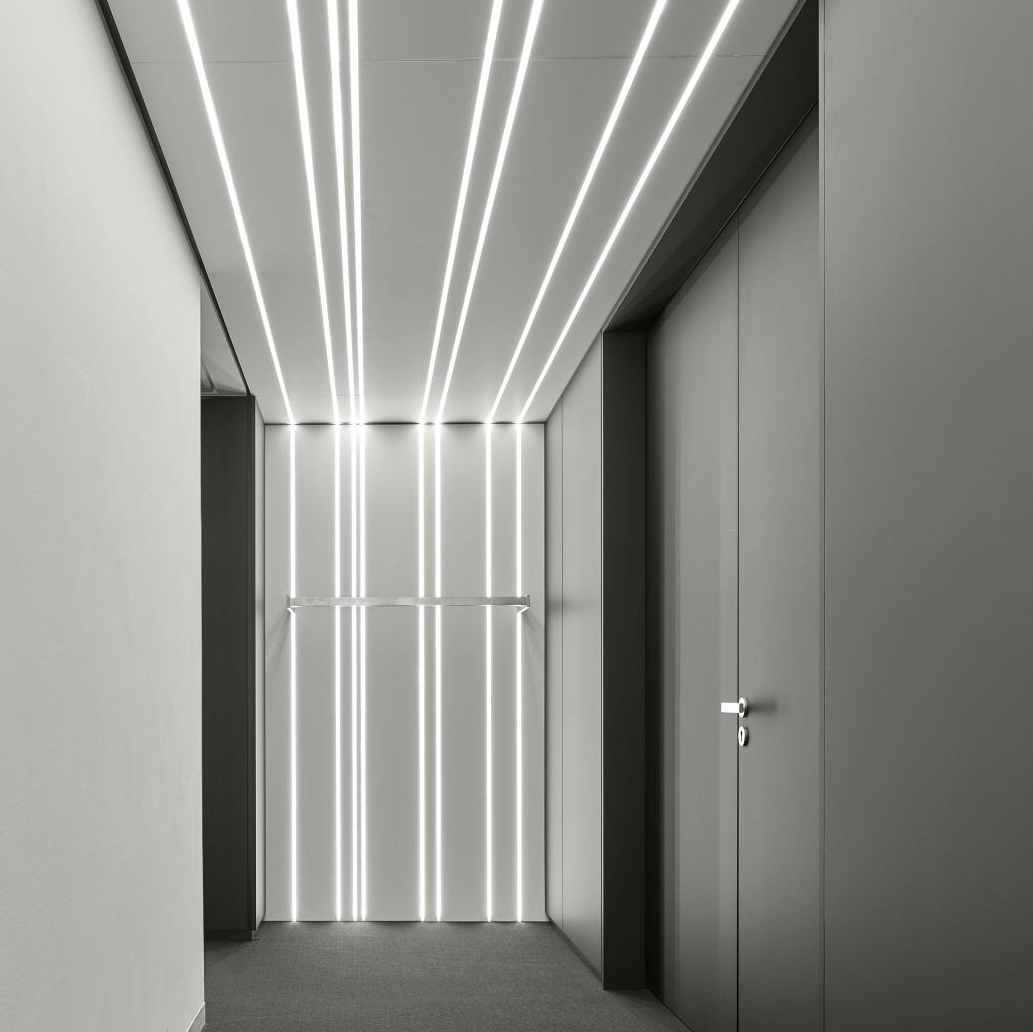
To combat thermal degradation, lighting engineers rely on specific metallurgical properties to draw heat away from vulnerable components. The cooling process hinges on two foundational principles of thermodynamics: conduction and convection.
Initially, thermal conduction takes place when the flat, adhesive back of the LED strip makes direct, flush contact with the metal base. Because metal possesses a superb thermal conductivity rating, it acts as a sponge. It rapidly absorbs the heat generated at the diode junction. Following this, thermal convection occurs. The housing spreads this concentrated heat across its much larger exterior surface area. As ambient room air flows over the metal, the heat is safely and continuously dissipated into the surrounding environment.
Not all housing materials are created equal. You may find cheap PVC or plastic channels on the market, but these materials act as thermal insulators. Instead of cooling the diodes, plastic essentially suffocates them. This traps heat and vastly accelerates component failure. In stark contrast, high-grade 6063-T5 extruded aluminum delivers the perfect balance of thermal conductivity, structural rigidity, and lightweight versatility. For those looking to secure long-lasting installations, utilizing a premium LED Strip Lighting Aluminum Profile is widely considered the gold standard for modern thermal management.
Feature | Bare LED Strips | With Aluminum Profile |
|---|---|---|
Operating Temperature | High risk of thermal throttling | Maintains stable, low junction temperature |
Expected Lifespan | Often fails before 15,000 hours | Reaches full 50,000-hour potential |
Light Quality | Harsh glare and visible dotting | Smooth, continuous, neon-like glow |
Physical Protection | Vulnerable to dust, moisture, and impact | Fully shielded by metal and PC diffuser |
Maintenance Costs | High frequency of adhesive failure and replacement | Virtually zero maintenance required |
There is a direct, undeniable correlation between the operating temperature of a semiconductor and its overall lumen efficiency. These components function at peak efficiency in cooler environments. When a metal housing successfully lowers the junction temperature, the diode requires less forward voltage to emit the exact same volume of light.
Therefore, a properly cooled LED is objectively a brighter LED. By maintaining a stable, low temperature, the extrusion ensures the light output remains brilliantly consistent. This completely avoids the flickering or sudden brightness drops associated with thermal throttling.
Raw brightness is only half the battle. The quality of light distribution dictates the actual ambiance of a room. Bare strips produce harsh, concentrated points of glare, commonly referred to as the dreaded spotting effect. To counteract this visual clutter, metal profiles are paired with precision optical diffusers. Premium fixtures typically utilize polycarbonate diffusers engineered for up to 85 percent light transmittance.
Picture walking into a high-end retail boutique. The lighting does not look like a cheap string of dotted bulbs. Instead, it appears as a seamless, continuous ribbon of neon-like glow. A properly matched frosted diffuser scatters the concentrated beams, blending individual diodes into a smooth wash of light. This maximizes the perceived brightness of the space while protecting occupants from uncomfortable eye strain.
Beyond the realm of thermal engineering, these extrusions serve as a transformative tool for interior designers. They elevate standard, functional illumination into a high-end structural feature. Specifically, recessed plaster-in trimless profiles are heavily favored for minimalist designs. They create flawless lines of light that appear to emerge magically from the drywall itself.
Surface-mounted variants are equally stunning when utilized for perimeter cove lighting or striking geometric ceiling patterns. For instance, incorporating a customized LED Profile Ceiling Design Light into a modern living room or corporate lobby adds immense architectural depth. It successfully replaces the bulky visual clutter of traditional hanging fixtures with sleek, contemporary lines.
In commercial office spaces and upscale residential builds, linear lighting is rarely deployed in isolation. A highly effective and visually dynamic strategy involves layering different light sources. By pairing sophisticated linear channels with a standard Ceiling Panel Light, designers can achieve perfect harmony between task and ambient lighting.
While the broader panels deliver functional, widespread illumination necessary for desks and workspaces, the linear profiles can be routed along walkways or suspended above conference tables. This provides directional, mood-enhancing accents. This layered approach ensures the environment remains highly productive while maintaining a refined, upscale aesthetic.
The true return on investment for any LED system hinges entirely on the fixtures actually surviving to their advertised lifespan. Top-tier diodes boast ratings of up to 50,000 hours. However, they will never achieve this milestone in the real world without robust physical and thermal protection.
An aluminum extrusion acts as an impenetrable fortress for the delicate surface-mounted circuitry. It shields the internal components from moisture, accidental impacts, and suffocating dust buildup. Dust acts like a heavy insulating blanket on a bare strip, forcing it to overheat. Empirical data from field engineers demonstrates that combining proper heat sinking with physical shielding can extend a strip functional life from a compromised 15,000 hours to its full 50,000-hour potential. Ultimately, this longevity translates into massive financial savings. It virtually eliminates the labor and material costs associated with premature replacements.
Procuring the correct hardware requires a careful evaluation of your specific project parameters. Selecting the wrong extrusion can instantly negate both the cooling benefits and the visual appeal of your setup.
First, always verify the internal width. Standard tapes range from 8mm to 12mm. Meanwhile, waterproof or multi-row strips often demand wider channels up to 20mm. Ensure your chosen profile has at least a 1mm clearance on each side of the tape for thermal expansion. Second, consider the geometry of your application. U-shape profiles dominate flat surface mounting under cabinets, whereas V-shape profiles feature a 45-degree angle perfectly engineered for corner display cases. Finally, prioritize material quality. Always seek out anodized 6063-T5 aluminum. The anodization process creates a rugged, corrosion-resistant oxide layer that guarantees the metal will not scratch or tarnish over decades of use.
Even the highest quality materials will underperform if installed incorrectly. Surface preparation is the most critical, yet often overlooked, step. Before adhering the strip, thoroughly wipe the inside of the aluminum channel with isopropyl alcohol. Removing factory oils and dust ensures absolute flush contact between the tape and the metal. This effectively eliminates microscopic air gaps that hinder thermal transfer.
When it comes to mounting, avoid relying solely on double-sided tape for the heavy metal channels themselves. Utilize the provided steel mounting clips or countersunk screws to secure the housing firmly to the ceiling or cabinetry. For a truly flawless finish, plan your wiring routes in advance. Drilling a small exit hole directly behind the profile allows you to run the low-voltage wires into the wall cavity. This keeps the external aesthetic completely clean and wire-free.
While technically possible for very low-wattage accent strips, it is heavily discouraged for any high-brightness or primary lighting applications. Without the metal housing acting as a heat sink, the diodes will inevitably overheat, suffer rapid lumen depreciation, and fail years before their intended lifespan.
Yes, slightly. A frosted or milky polycarbonate diffuser typically reduces raw lumen output by roughly 10 to 15 percent. However, this minor loss in raw brightness is a worthwhile trade-off. The diffuser dramatically improves the actual quality of the light by eliminating harsh glare, softening shadows, and masking the individual diode dots.
For a completely flush, architectural look, recessed plaster-in trimless profiles are the ideal choice. These feature perforated flanges that get mudded and plastered directly into the drywall. Once painted, the aluminum frame becomes entirely invisible, leaving only a sleek, glowing line of light embedded in the ceiling.
Absolutely. The depth of the channel dictates how much distance exists between the LED diodes and the plastic diffuser. Deeper profiles give the light beams more room to spread and overlap before hitting the cover, which is the most effective way to achieve a completely spotless, continuous neon glow.
Extruded aluminum is relatively soft and easy to work with. You can cut it precisely using a standard hacksaw with a fine-tooth metal blade, or an electric miter saw equipped with a non-ferrous metal cutting blade. Always remember to slide the plastic diffuser out and cut it separately to prevent the acrylic from shattering or splintering.
The channel itself dissipates heat, but preventing the dotting effect depends on the combination of channel depth and diode density. Pairing a deep aluminum profile with a high-density strip and a frosted polycarbonate cover will completely eliminate visible dots, creating a perfectly diffused line of light.
Architectural lighting engineers highly recommend 6063-T5 aluminum alloy. This specific grade offers superior thermal conductivity, excellent structural integrity, and takes anodization exceptionally well, ensuring the heat sink remains corrosion-resistant over its entire lifespan.
Upgrading your architectural lighting requires precision, durability, and superior thermal management. Do not let overheating compromise the lifespan and beauty of your installation. For heavily engineered, durable, and visually striking options, explore a dedicated LED Strip Lighting Aluminum Profile collection. Sourcing the right commercial-grade fixtures ensures your next renovation meets the absolute highest standards of both design and safety. Visit Contation LED to find the exact hardware parameters tailored for your professional project.


